

Request a Product & Film Trial for Sachet Packaging
Sachet packaging sample testing runs your real product and film to check dosing, seals and looks. See what to send, what we check and what the test record says.
 Illustration
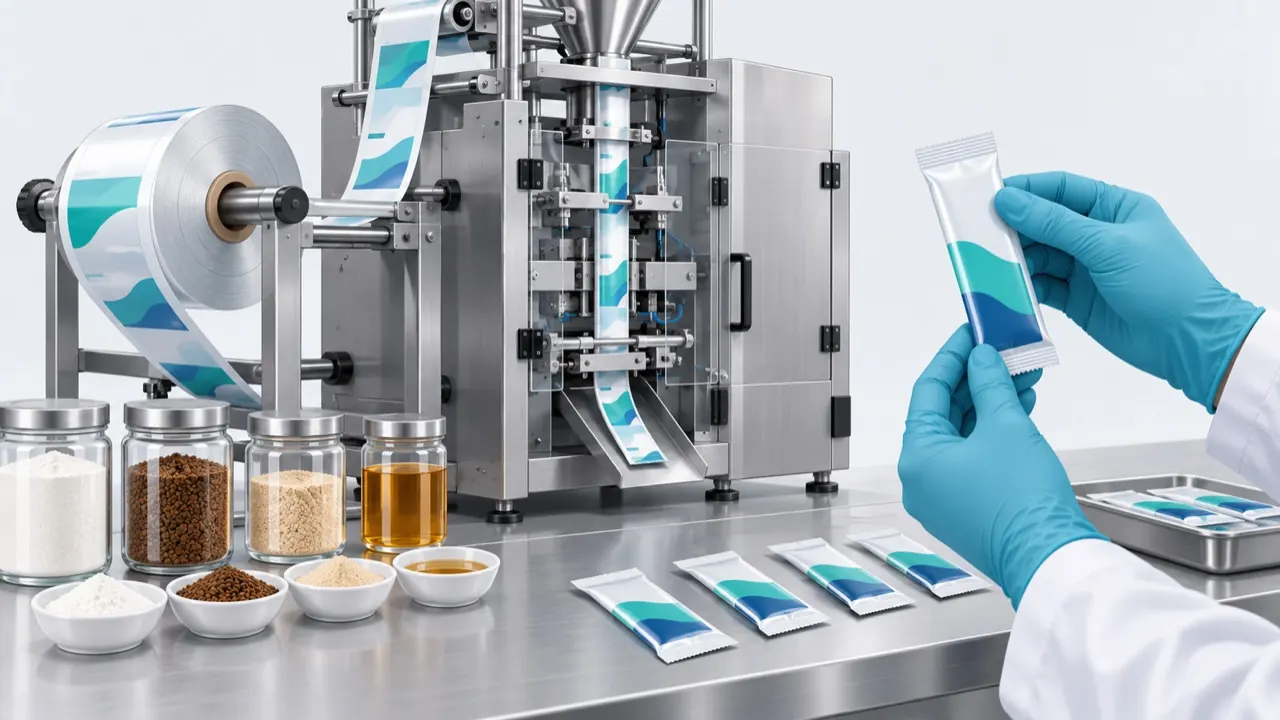
A trial runs your real product on your real film, so dosing, sealing and appearance are checked on your material and not on assumptions. Two products that look alike can behave very differently in a doser, and two films with the same nominal structure can seal differently. We don't promise a cost, a timeline or a pass here. Those are agreed for your project when you ask.
Why trial with your real product and film?
Density, flow, stickiness, viscosity, particle size and dust all change how a product doses. Film structure, thickness, coating and print change how it seals and cuts. A trial puts the two together on the real combination, which is the only place the interaction shows up.
It earns its time most when the product is fine, dusty, sticky, viscous or full of particles. It also matters when the sachet or fill is small, because the same error is a bigger share of the dose. And it helps when you must match an existing sachet or print design, or when you want several lanes and need to know if the product tolerates that layout.
What should I provide for a trial?
Send what you have and tell us what you don't know yet. Useful inputs are:
- A product sample, with safety data such as handling and storage information. Mention any irritant, allergen, dust or temperature concern.
- A roll or sample of your film, with structure and width if you know them. Your actual film is the point of the trial.
- A target sachet sample or drawing showing size, seal widths and any tear notch.
- The fill amount, in grams or millilitres per sachet.
- Your target output, so we can say whether single or multi-lane is realistic.
If you haven't settled on a product group, our pages on powder, liquid and granule sachet machines describe the dosing methods we would test. Your seal style matters as well, for example a four-side seal sachet.
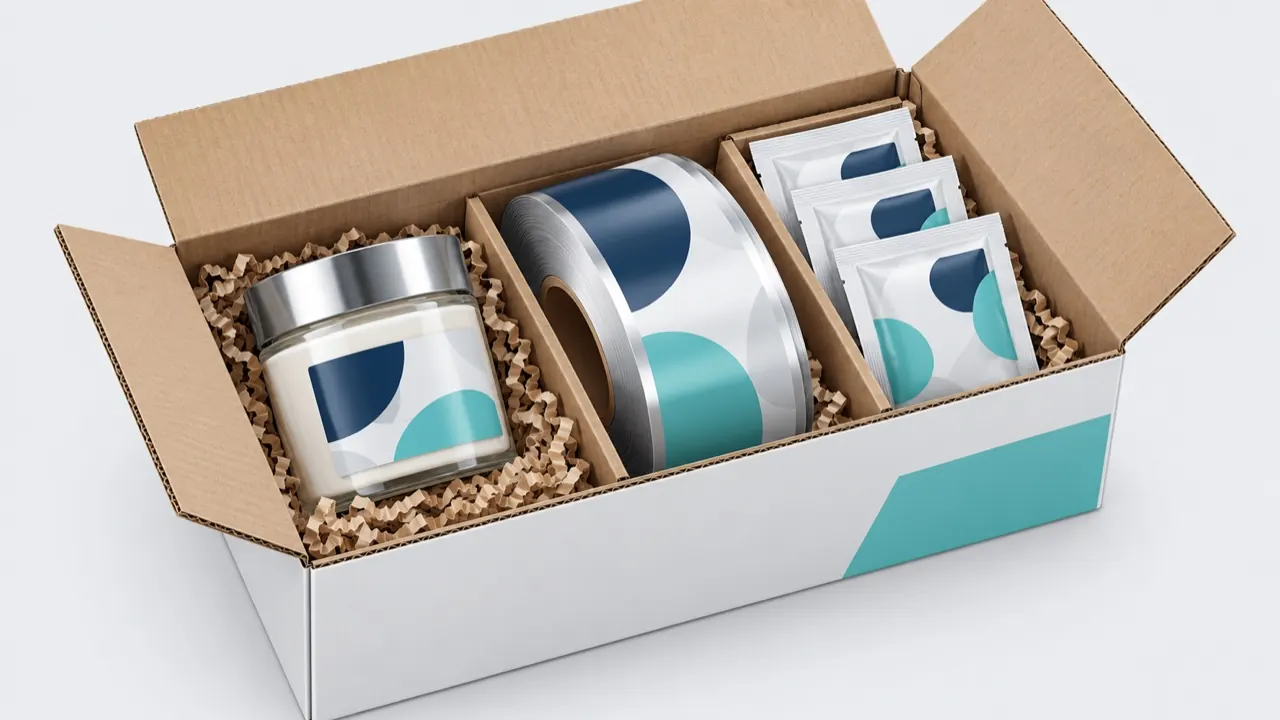
Illustration: what to put in the box. Product, film, a target sachet and the fill amount.
How is a trial evaluated?
We weigh sachets, or check volumes, to see how the dose drifts across a run. We inspect seals by pressing and by eye, and by leak checks suited to the product. Then we look at the sachet itself: wrinkles, creases, product caught in the seal, whether the cut lands in the right place and, on printed film, whether the print registers. For powders we watch for dust around the seal and work area. For liquids and pastes we watch for drips and for product that strings from the nozzle into the seal area, which is a common reason for leaking sachets.
How a run is set up depends on the product and the machine configuration. We write the run conditions into the record so you can see what the results relate to.
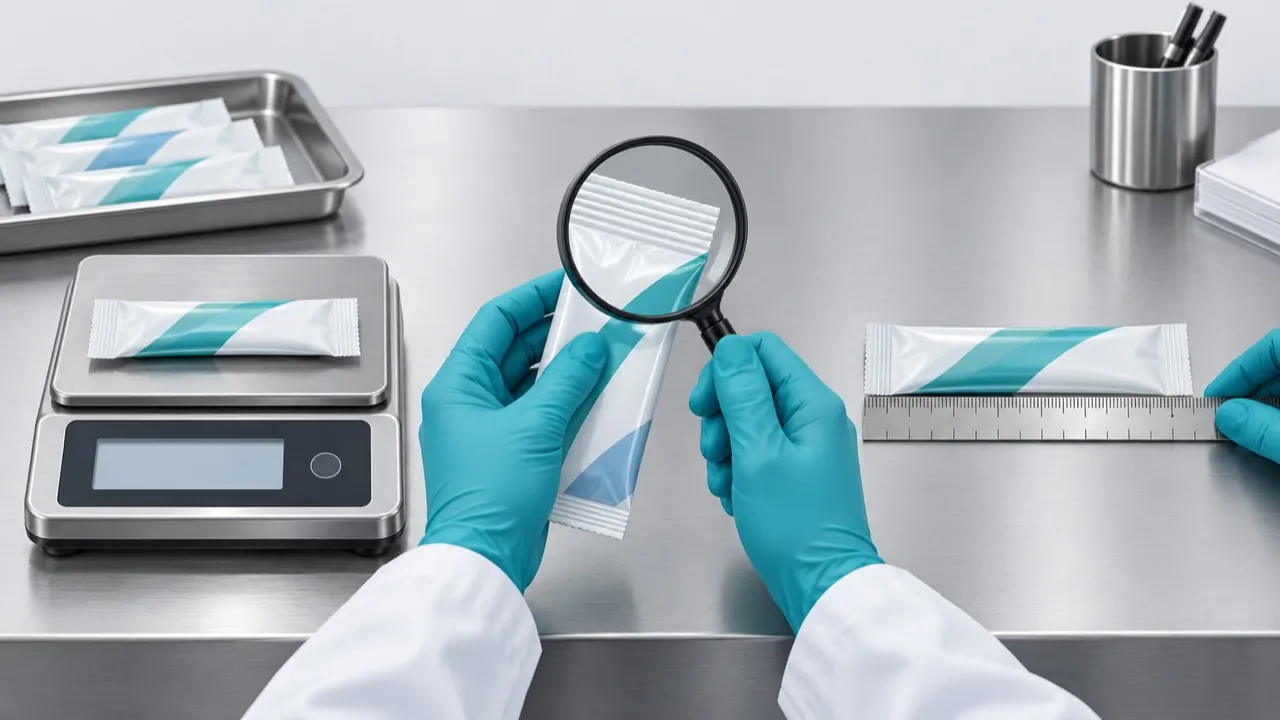
Illustration: the checks we run on a trial, from weighed doses to seal and cut quality.
What do I receive after a trial?
You get a test record you can review and reuse in the quotation. It contains:
| Field | What it tells you |
|---|---|
| Product | The material tested |
| State | Powder, liquid, paste or granule and its behaviour |
| Fill amount | The dose per sachet tested |
| Film | The film used |
| Sachet size | The format and dimensions |
| Machine and configuration | The set-up and dosing system used |
| Run conditions | How the machine was run during the test |
| Results | What was measured and observed |
| Limitations | What the result does not cover |
A record is only as good as its conditions, which is why we write them down.
What can a trial not prove?
A trial samples conditions. It is not a promise about every future batch. It can't show that every batch of product or film will behave like the sample, since materials vary. It doesn't carry over to a different fill amount, sachet size or film. A short test may not match a long run, especially with products that change over time, such as ones that pick up moisture. And a result at one output setting may not hold at a higher one.
Production output has to be worked out for your product, film and sachet, and the written quotation says what is covered. We never assume a pass. If a trial shows the product is difficult, we say so and talk about changing the dosing, the film or the format.
Questions about sachet packaging trials
Is sachet packaging sample testing free?
We don't state that here. Any cost is agreed for your project when you ask for a trial.
How long does a trial take?
It depends on the product, the film and the configuration, so we don't set a time on this page. We tell you what to expect when we confirm the arrangement.
Should I send my own film?
Yes, if you can. Seal and cut results depend on the film, so a test on your film tells you more than one on a similar film. If you haven't chosen a film yet, say so, and read how sachet machines work with film.
Do I need a trial before requesting a quote?
Not always. You can ask for a quotation on WhatsApp first, and we will tell you if a trial would cut the risk for your product.
Can a trial confirm a multi-lane output?
It shows how the product behaves in the dosing and sealing set-up we used. Lane count and output still depend on your sachet size and film, and the multi-lane sachet machine page explains how they relate.
Not sure which configuration fits your product?
Send your product and pack details, or ask for a trial on your own material before you decide.