

Tea Sachet Packing Machine for Whole-Leaf & CTC Tea
Choose a tea sachet packing machine for flat barrier packs. Compare whole-leaf weighing, CTC cup dosing, clean seals and nitrogen-flushing trial checks.
Choose a tea sachet packing machine around the tea's handling behavior and the finished pack: shortlist weighing for fragile whole leaves, and evaluate volumetric cups for consistent, freely flowing CTC grades. For loose tea in flat barrier sachets, check dose weight, leaf condition and seal integrity together before selecting a configuration.
Send LINEVO your tea form, target portion and pack sample for a configuration review. The selection steps below explain what to compare in a product and film trial, including nitrogen flushing when your preservation plan calls for it.
Which kind of tea sachet are you making?
A direct-fill barrier sachet holds loose tea for storage; the consumer opens it and pours the tea out. A permeable infusion bag holds tea during brewing, while an outer envelope wraps an already-made tea bag. Specify the finished pack when requesting a tea sachet machine, because these functions require different filling and packaging arrangements.
For a flat tea sachet packing machine, confirm the three-side or four-side seal format, sachet dimensions and usable space around the dose. Long leaves need room to enter and settle clear of the sealing area. The four-side seal machine guide explains the pack geometry; the applications overview helps route other product forms.
Whole-leaf weighing or CTC cup dosing?
Start with leaf shape, flow and batch consistency. Whole leaf and CTC are useful starting descriptions, but the actual grade determines whether the proposed feed path and doser work well.
| Tea condition | Dosing route to evaluate | Main trial question |
|---|---|---|
| Long, fragile whole leaves | Micro multihead or linear weighing with gentle transfer | Do leaves move through the feed path without trapping, and retain the agreed appearance? |
| Consistent, freely flowing CTC granules | Volumetric cup; compare weighing if mass variation is excessive | Does every cup fill, level and empty consistently across representative batches? |
| Mixed leaf sizes or a fines-heavy grade | Compare feeding behavior before choosing cups or weighing | Do fines change cavity filling, dust release or the packed leaf distribution? |
| Soluble tea powder | Review powder feeding and dosing | Does the powder bridge, hold air or leave dust at the seal? |
CTC means crush, tear and curl; specify the actual grade and its fines content. CTC can also be weighed. For soluble powder, use the powder dosing review; for the broader cup-versus-weighing comparison, see granule sachet packing machines.
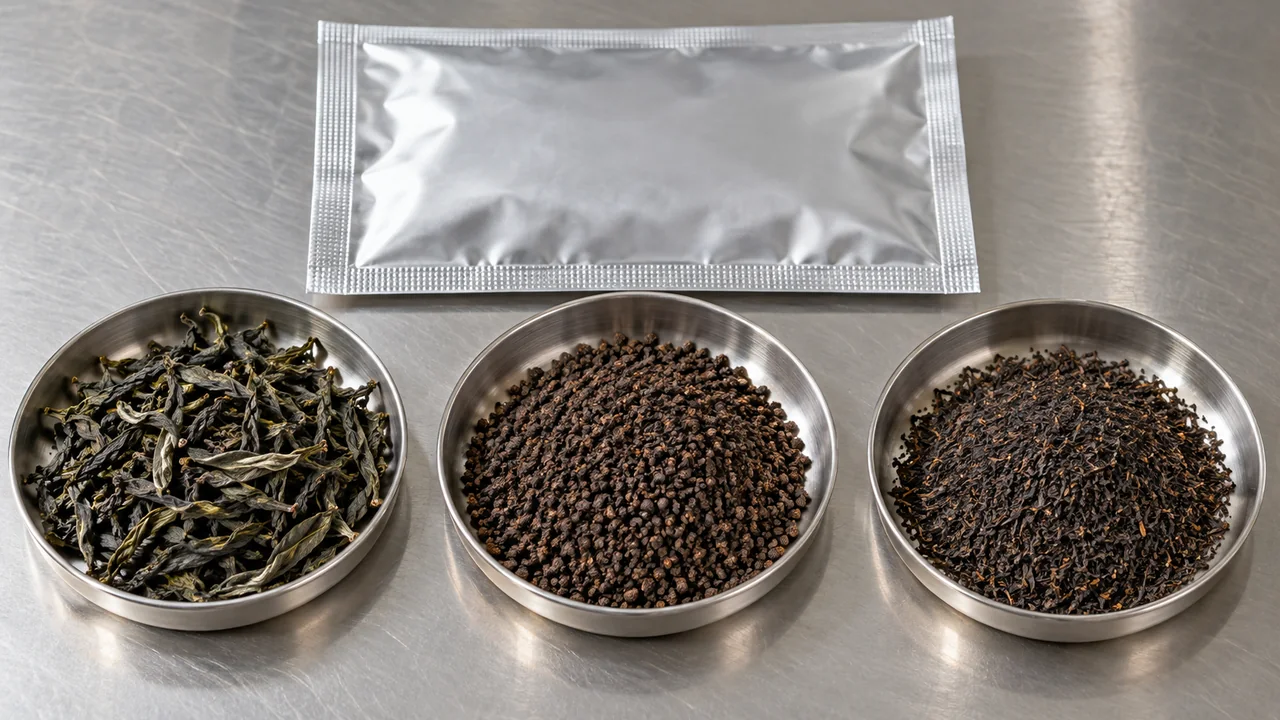
Illustration: compare leaf shape and fines content before selecting a dosing route. Record flow and filling behavior on the production grade.
How do you protect whole leaves during dosing?
For a loose leaf tea sachet packaging machine, assess the entire transfer path as well as the weighing unit. Review hopper feeding, gate openings, drops, discharge chutes and the entry into the sachet. Short, controlled transfers are design variables to evaluate for fragile material.
Micro multihead weighing is used for small target weights of tea. Linear weighing is another arrangement to review against the target portion and feeding behavior. A weighing signal controls mass; leaf condition still depends on how the material reaches and leaves the weighing section.
Keep an incoming sample for comparison with material collected after dosing and from opened finished packs. Use the same visual grading or agreed sieve method for each sample, so new fragments can be distinguished from fines already present in the batch. Record net mass separately from leaf appearance.
Inspect potential trapping points at gates, cup edges, levelers and discharge openings. If a proposed cup handles the grade gently and repeats the required mass, evaluate that result alongside weighing. Auger Fabrication's technical note Auger Fillers…Not Your Only Option describes a cup sequence with gentle leveling; suitability depends on the material and mechanism.
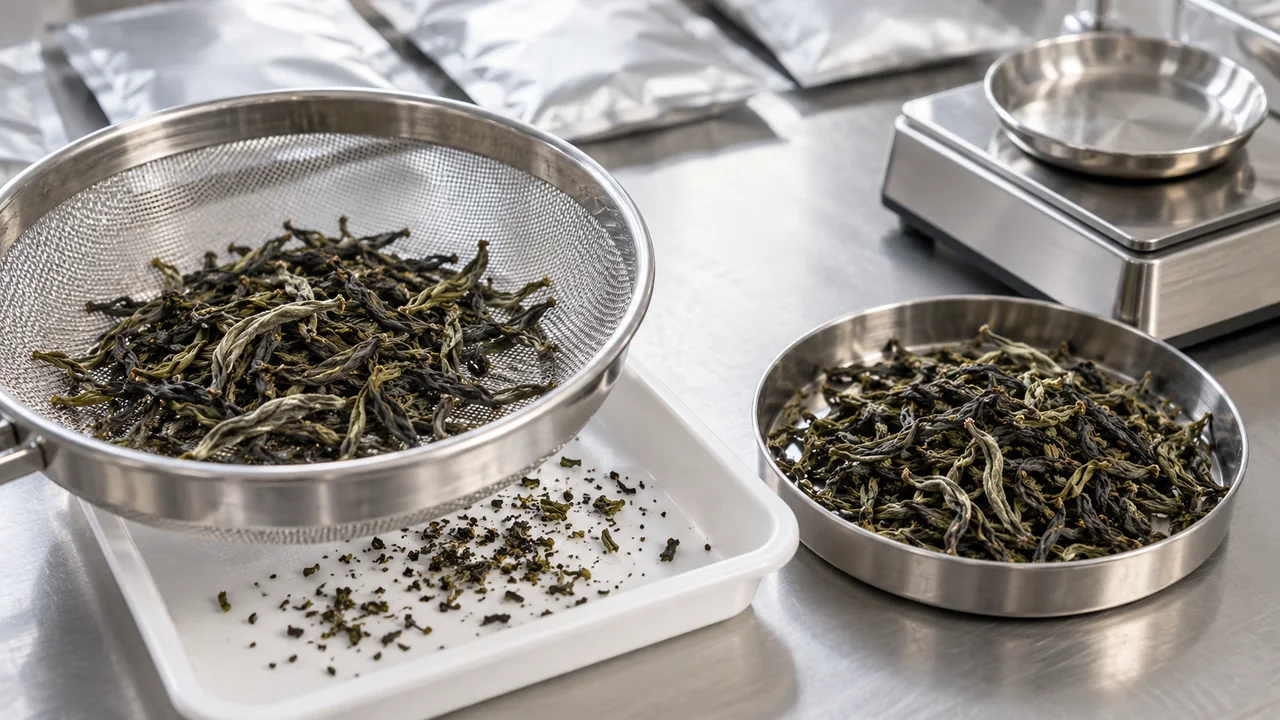
Illustration: use one agreed leaf-grading method across incoming, discharged and packed samples. Weigh portions separately to assess dose consistency.
When is cup dosing suitable for CTC tea?
Evaluate cups when the CTC grade flows into a cavity, levels consistently and releases completely. A cup meters volume, so its delivered mass changes when the density of the filled tea changes.
Dose mass (g) = filled cup volume (mL) × bulk density in the cup (g/mL).
Use that relationship to understand a weight shift, then weigh actual portions. Check empty-pack tare when weighing finished sachets. Compare representative batches and observe normal running, replenishment, starts and stops; settling and incomplete filling can change the result even with an unchanged cup setting.
If mass variation exceeds the agreed acceptance tolerance, investigate filling and discharge behavior, then compare a weighing arrangement. Keep leaf condition in the comparison. The auger versus cup filling guide explains the volumetric mechanisms and how to record a paired trial.
How do tea dust and fine hairs affect the seal?
Observe where particles reach the sealing margin, then address that route. Airborne fines, late product release and physically trapped leaves can all contaminate a seal. When lightweight dust or tea fuzz clings to the web, assess static as one possible cause.
Meech's Vertical form filling application note explains how charged film attracts lightweight dust onto the inner surface and into the seal. For tea, inspect the actual adhesion pattern and review static-control placement with the film construction and machine geometry, including metallised or foil-containing webs.
Check that the dose clears the closing seal, that the sachet has enough usable fill space and that sealing surfaces remain clean. On four-side sachets, inspect all seal edges as well as the transverse sealing area.
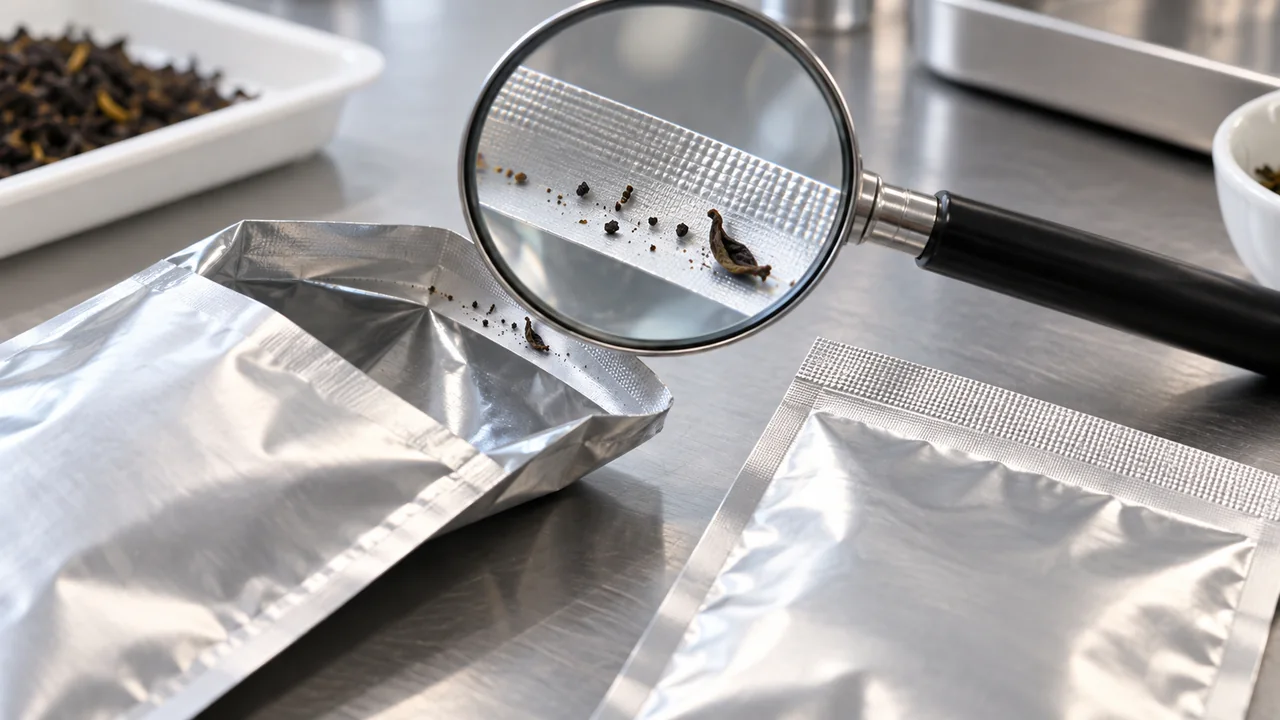
Illustration: inspect the film surfaces that must join at the seal. Track particles back to the filling path and verify finished-pack integrity.
Qualify heat, pressure and dwell time together on the production film. A. Hatzopoulos's Sealing trouble shooting distinguishes seal integrity from seal strength and includes contamination among its checks. Resolve the contamination and film-setting questions before simply increasing heat. The sachet sealing troubleshooting guide covers the broader diagnosis.
What should a nitrogen-flushing trial verify?
Verify the oxygen remaining in finished sachets and whether the package retains its protective atmosphere. Nitrogen displaces air; moisture protection also depends on the tea's condition, the film's water-vapor barrier and intact seals.
Green-tea storage research by Shu-ichi Fukatsu, Storage of Green Tea by the Use of Various Packaging, examines moisture protection and gas permeability together. Kozo Furuya's Inert Gas Packaging of Tea also discusses residual air associated with tea and changes in package oxygen after gas replacement. Use the intended tea, film and storage conditions to establish the preservation requirements.
Set up the trial around these separate checks:
- Package gas: agree the residual-oxygen acceptance criterion and measurement time. Select an analyzer and sampling method suited to the available headspace. Measure the pack contents as well as checking the gas supply.
- Leak integrity: choose a method suited to the finished sachet and agree its acceptance criteria. WITT's Modified Atmosphere Packaging white paper calls for both package-gas analysis and leak testing.
- Retention: agree a later sampling interval to examine changes after sealing, using a suitable sampling plan. Review rising oxygen alongside leakage, film barrier and residual air in the product.
- Storage performance: evaluate the required shelf life with the product and packaging team under the intended distribution conditions.
Review the nitrogen arrangement with the required output and filling sequence. The trial should show how filling, gas delivery and sealing work together at the proposed operating conditions.
Prepare a tea sample trial and quotation
Send the following information to LINEVO so the team can review the dosing route, flat-sachet format and trial requirements:
- Tea form and grade: whole leaf, rolled leaf, CTC, fines-heavy blend or soluble powder; include photos and representative batch differences.
- Target net mass and acceptance tolerance, plus the leaf appearance or fines criteria that matter to your product.
- Sachet drawing or sample, dimensions, seal format, production-film structure and available barrier/sealing data.
- Required output and the feeding behavior you observe, including bridging, dust or incomplete release.
- Nitrogen requirement, available supply, package-oxygen objective and intended storage conditions.
Use one product-and-film trial to compare mass, leaf condition, seal cleanliness, leakage and any package-gas requirements. Agree the sample quantity and shipping arrangements through sample testing before sending material.
Send your tea and sachet requirements on WhatsApp to request a configuration review and quotation.
Questions about tea sachet packing machines
Can one machine pack whole-leaf and CTC tea?
Evaluate each grade through the proposed feed path and doser. A change in leaf size, density or fines may require different feeding or dosing settings. Include cleaning, changeover and the intended film in the review, and retain separate acceptance results for each tea.
Is a flat tea sachet the same as a flat tea bag?
A flat barrier sachet stores tea until opened. A flat infusion tea bag lets water reach the tea during brewing. Share the finished pack sample and its intended use so the machine review starts with the correct material and packaging sequence.
Does every tea sachet need nitrogen flushing?
Base the decision on the tea's preservation requirements and shelf-life evaluation. If nitrogen is specified, define finished-pack oxygen, leak integrity and film-barrier requirements together, then assess them under the intended production and storage conditions.