

Sachet Packing Machine for Body Lotion: Trial Records
Published by the LINEVO sachet equipment team. Technical questions and corrections
Compare body-lotion sachet proposals with separate records for each recipe, nozzle cut-off, film and seals, then check colour and fragrance changeovers.
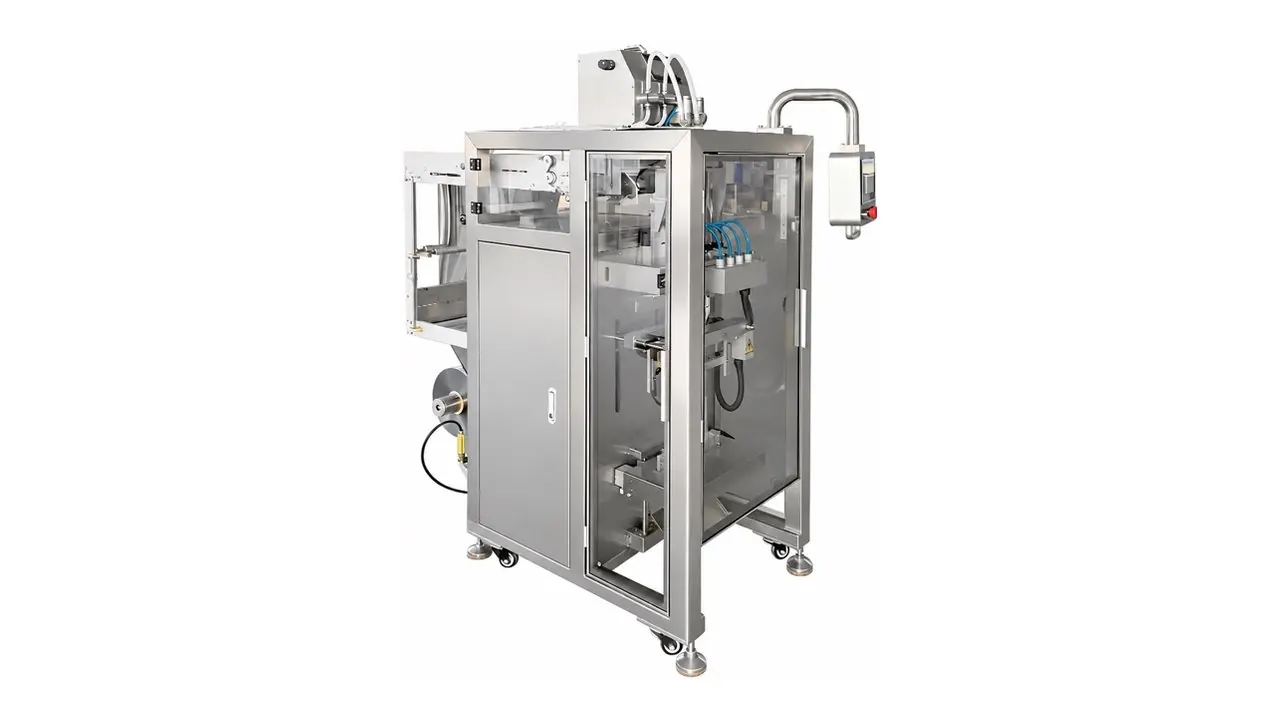
A leaking body-lotion sachet wastes product even when its fill weight is correct. To choose a sachet packing machine for body lotion, start with a liquid/paste configuration and trial every formulation on the intended film.
Keep a separate trial record for every body-lotion formulation. The records below help compare a proposed setup without treating a shampoo or cream demonstration as acceptance of your lotion range.
| Input | Use this source | Decision it supports |
|---|---|---|
| Formulation identity | Recipe and batch reference for each lotion | Which products the trial actually covers |
| Temperature and flow | Intended fill temperature; lab measurement conditions if available | Whether the sample represents production handling |
| Dose | Target amount and unit; buyer-agreed acceptance limits | How to judge the filled sachets |
| Pack and film | Sachet drawing and intended film specification or roll reference | Which sealing combination is being evaluated |
| Changeover | Previous recipe, next recipe and approved cleaning procedure | Which transition needs its own acceptance record |
Which configuration should enter the lotion trial?
Start with the liquid and paste sachet machine family, then ask the proposal to name the pump, nozzle, product-contact materials and cleaning access. A product list that includes “lotion” is a starting point for discussion; it does not establish the dose, cut-off or cleaning result on your recipe.
Specify the pump, nozzle, feed arrangement and cleaning access for each lotion formulation. The LINEVO SY liquid-sachet series lists a piston dosing pump; identify any heating or cleaning options separately in the quotation.
Give every formulation its own identity, even if the sachet size is shared. Record any visible particles and the intended handling temperature. If a viscosity measurement is available, attach its temperature and measurement method. Brookfield’s viscosity measurement guide explains the effect of temperature and measurement conditions on viscosity readings. A lone viscosity number is an incomplete comparison.
Until those inputs are known, leave the machine setting or suitability answer open. “Unknown / verify on the unit” is more useful than copying a setting from a different cosmetic product.
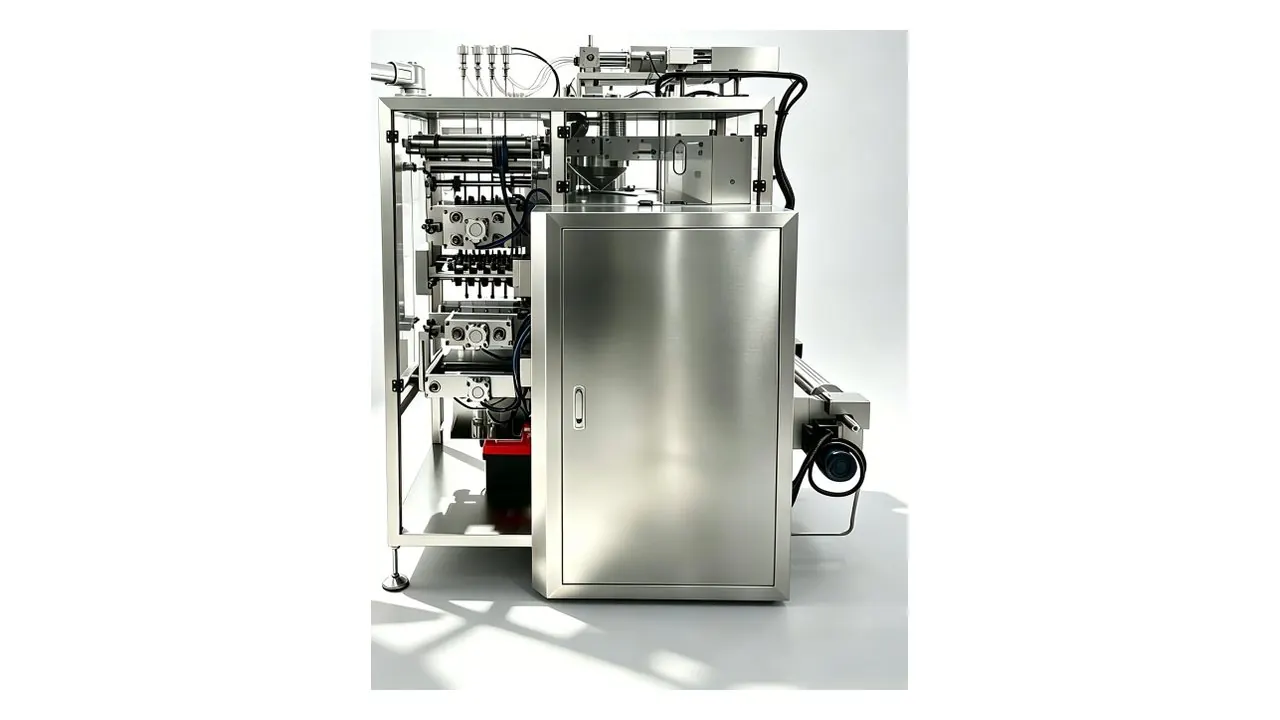
LINEVO catalog photograph. The open front guard exposes the filling and sealing area for configuration and access review. Catalog configuration reference for the trial plan.
Record the fill and seal for each formulation
Agree the dose limits, seal test method, sample selection and trial conditions before running. The sample-testing process explains how product, film and pack requirements enter that discussion. Use a fresh copy of this blank record for each recipe; nothing in the empty cells represents a result.
| Trial field | What to enter | Observed result |
|---|---|---|
| Formulation and batch | Recipe reference, colour/fragrance variant and sample batch | |
| Fill temperature | Actual temperature with unit, alongside intended handling condition | |
| Flow information | Viscosity report and measurement conditions if available; visible particles | |
| Target dose | Amount, unit and agreed acceptance limits | |
| Film and sachet | Roll/specification reference, seal layout, width and length | |
| Proposed equipment | Pump, nozzle and product-contact parts identified on the proposal | |
| Start-up and restart | Conditions, discarded sachets and when accepted sampling begins | |
| Cut-off | Drip or tail observed; where it lands relative to the seal band | |
| Filled dose | Individual measurements and the measurement method | |
| Seal inspection | Named seal/location, any trapped product and the agreed test result | |
| Decision | Accepted for these conditions, revise, or unresolved; person responsible |
Record what was measured and how. If the target is a mass, account for the empty pack when weighing the filled dose. If the target is a volume, agree the measurement method; grams and millilitres are different quantities. A pump setting alone is not the observed contents of the sachet.
Watch the nozzle at the end of the dose, then inspect the pack. If lotion reaches the top seal band, record that location before changing settings. A correct dose and a contaminated seal are separate findings.
Inspect the seal area for lotion residue and check sealing-tool cleanliness. Use the agreed package test alongside that inspection. ASTM F88/F88M addresses seal-strength measurement. For this trial, keep the agreed seal test alongside visual inspection; appearance alone does not establish an acceptable seal. Follow the machine and film instructions when changing conditions rather than adopting a universal sealing temperature.
Test the transition between recipes separately
After one formulation runs acceptably, the next question is what happens between that recipe and the next one. Write down the actual sequence, including colour and fragrance changes, and have the buyer's quality owner identify which transitions need examination. Do not assume that acceptance of one direction covers the reverse direction.
Ask our engineering team to show every product-contact part on the proposed unit, how it is accessed and which cleaning procedure applies. The generic components pictured below are reference objects for that discussion, not a parts list for a quoted machine.
Use a separate transition record so the second recipe's acceptable dose cannot hide an unfinished changeover review.
| Changeover field | What to record | Observation or decision |
|---|---|---|
| Previous recipe → next recipe | Both identities and batch references | |
| Procedure used | Approved cleaning procedure reference and responsible operator | |
| Product path | Hopper, pump, valves, hoses and nozzle actually present; access confirmed on the unit | |
| Parts handled | Parts removed or accessed according to the machine instructions | |
| Restart conditions | Next recipe, temperature, film and settings; material kept separate before acceptance | |
| Colour observation | Comparison with an unused reference sample of the next recipe using the agreed method | |
| Fragrance observation | Quality-owner-approved assessment method and reference; result or unresolved | |
| Next recipe's fill and seal | Reference to its separate formulation record | |
| Release decision | Agreed criteria, result, authorising person and unresolved checks |
Colour and fragrance observations can flag an issue for investigation. They do not prove that residues are absent or validate cleaning. Keep any additional acceptance work required by the buyer's quality system separate, and leave release unresolved until its owner accepts the evidence. This record supplies no cleaning chemicals, temperatures, times or microbiological method.
LINEVO catalog photograph. Supply tubes and filling outlets are visible behind the guard. Review the quoted fluid path and access for cleaning. Catalog configuration reference for the trial plan.
How to read the records before accepting a proposal
If a formulation misses its dose limits, retain its feed conditions, pump and nozzle settings with the measurements. If dose is acceptable but the seal check fails, keep that as a sealing/cut-off issue. If individual recipes run acceptably but the transition record is unresolved, the proposed sequence still has an open acceptance question.
Repeat only the affected checks after a documented change, while retaining the previous result. A different film, nozzle or handling temperature changes the comparison; record it rather than attributing the outcome to the machine alone.
These records support a conditional decision about the tested combination. They establish no general speed, dose tolerance, cleaning duration, shelf life or suitability for all body lotions. For other buying decisions, the sachet machine guides provide the wider selection context.
What to send for a lotion sachet discussion
Send the formulation references and handling temperatures, target dose and unit, sachet drawing and film details, and intended colour/fragrance sequence. Attach available trial records and mark undecided inputs “to be confirmed.” These are the inputs for a configuration and sample-testing discussion; acceptance criteria still need agreement for the actual project.
Send your lotion formulations, fill temperature, dose, sachet and film details, and changeover sequence on WhatsApp to discuss the proposed setup.
Define the formulation and changeover scope
The proposed fluid path, nozzle and seal arrangement are reviewed against each actual formulation and production film. Record any temperature or mixing treatment with its product-quality constraints. Evaluate cleaning and reassembly separately from the filling run, including contact-part access and the checks required by the plant. Keep the agreed recipes, operating conditions and format parts together in the equipment scope.
Calculate quantity with explicit units
Net mass = gross mass − tare. When a volume declaration is checked by mass, V = m_net/ρ using the appropriate density and temperature basis. Record the actual method rather than treating grams and millilitres as equal.
Hypothetical arithmetic only: assume gross mass 11.5 g, tare 1.5 g and density 1.00 g/mL for the stated condition. Net mass is 10.0 g and calculated volume is 10.0 mL. These values are not a formulation property, dosing specification or completed factory measurement.