

Sachet Packaging Machine Price: Configuration & Cost Factors
Sachet packaging machine price depends on your product, dosing, lanes, sachet format and options. Here is what moves the cost and what to send us for a quote.
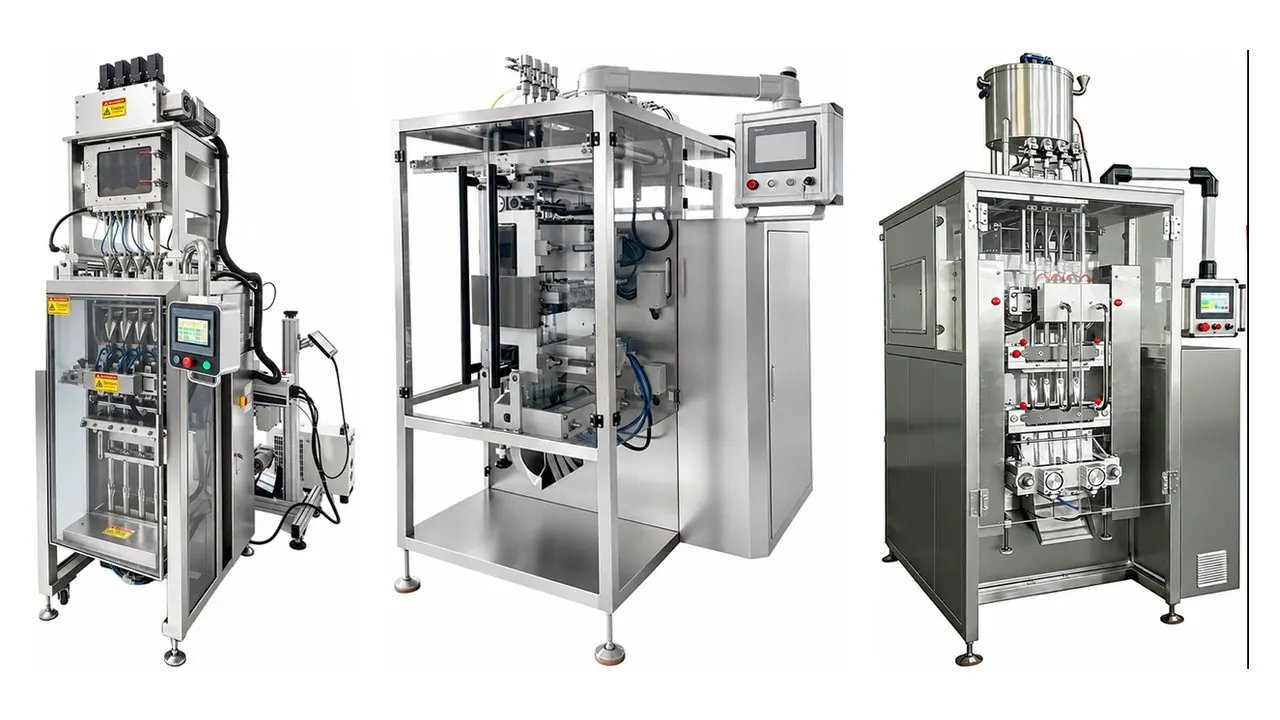
There is no list price for a sachet packaging machine, because the same sachet can need very different dosing, sealing and lanes depending on whether you are filling fine powder, sauce or granules. We do not print a headline figure here. A number with no product, sachet or output behind it would only mislead you. What we can do is show you what a quotation should contain, which choices push the cost up, and what to have ready so the quote matches your project.
What does a sachet machine quotation include?
Treat the quotation as a scope document that happens to have a total at the bottom. Ours states the machine configuration (sachet format, lane count, dosing system and the product it was selected for), what is in the base scope and what is priced separately, and which sachet sizes the quoted tooling covers. It also gives the trade term and delivery point, how payment is staged and how long the offer stays open, and whether installation, commissioning, operator training and documentation are included.
If an offer shows only a total, you cannot tell what you would actually receive. Ask for the scope in writing before you compare totals.
How do product and dosing differences change the cost?
Dosing is usually the biggest technical variable, because the doser has to suit how your product behaves. A free-flowing granule, a cohesive fine powder and a viscous paste cannot share one dosing method, so they do not share one cost structure.
Powders may use auger or volumetric cup dosing. Fine, dusty or sticky powders can call for agitation, dust extraction or special contact parts, and our page on powder sachet machines goes through the properties that matter. Liquids and pastes commonly use piston or pump dosing, and viscosity, particles and drip behaviour decide the pump type and the nozzle. The liquid sachet machine page covers those checks. Granules often use volumetric cups, where bulk density and flow decide the cup design and how steady the dose is; see granule sachet packing.
Materials of construction count too. Food, cosmetic and chemical products have different contact-part and cleaning requirements, and food-contact materials have to be confirmed for each configuration. An abrasive, hot or corrosive product, or a very small dose, can need different parts again.
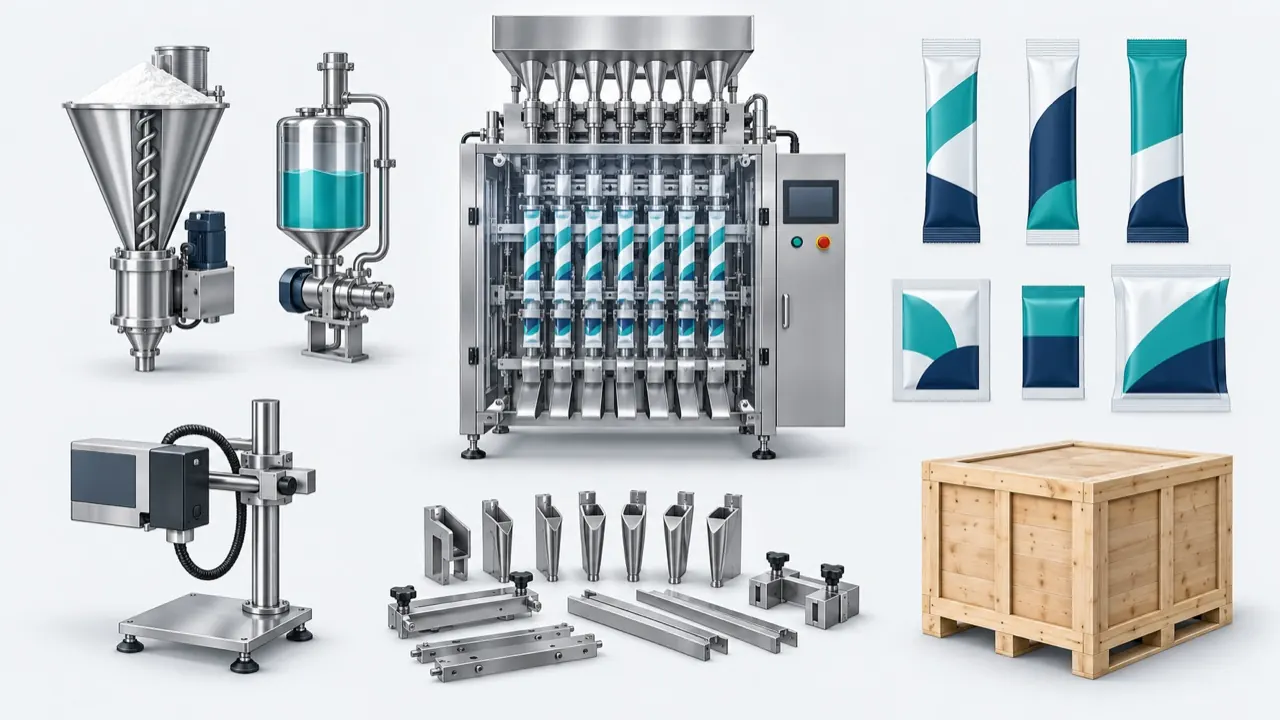
Illustration: several independent choices add up to the scope and cost of one configuration.
How do single-lane, multi-lane and sachet format affect cost?
A single-lane machine makes one sachet per cycle and a multi-lane machine makes several. That raises theoretical output, but every extra lane is another dosing station to supply and adjust, plus more sealing, cutting and film handling. So lane count is a real cost driver, not just a speed option. The multi-lane sachet machine page explains how lanes relate to cycles and what limits them.
Start with the sachet width, since it caps how many lanes will fit. Lanes are limited by sachet width, film width and the product, so the number should fall out of your sachet size and output target, not be picked first.
The LV-400Y in our catalog shows how much a configuration decides. It is a four-side seal sauce machine listed with 3 to 10 lanes, a 5 to 100 ml fill range and a piston pump with rotary valve and anti-drip dosing. Take away the sauce and those choices change, and so does the price.
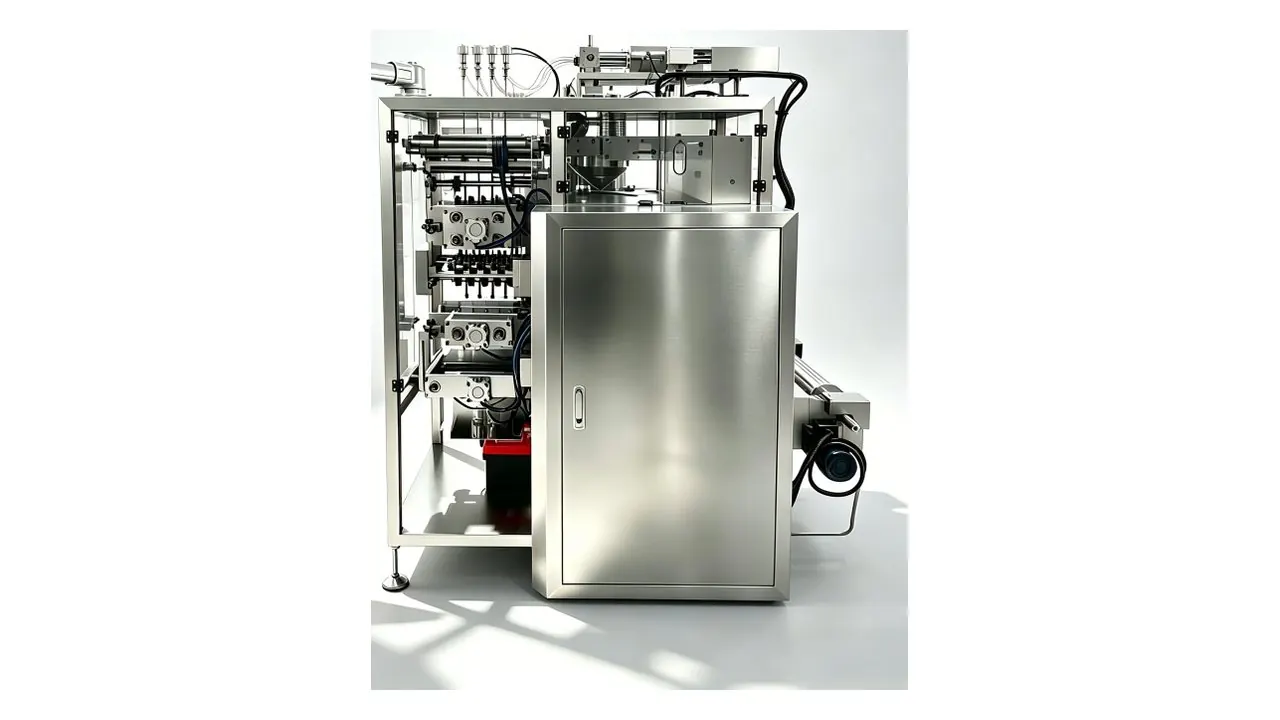
Photo: the LV-400Y, a four-side seal machine configured for ketchup and other viscous sauces.
Sachet format matters as well. Three-side and four-side seal sachets are built differently, and a four-side seal sachet machine suits products and layouts that a three-side seal does not. Size, seal width, film structure and any tear or perforation feature change the tooling a quotation has to cover. Changing size later usually means change parts, so tell us early if you will run more than one.
Which items are standard and which are optional?
What counts as standard depends on the configuration we recommend, so read it in the quotation rather than assuming. This table lists the options that come up most and why.
| Option | Why it is discussed | Worth raising when |
|---|---|---|
| Date coder or printer | Batch and date marking on the sachet | Your market or customer requires lot coding |
| Tear notch | Easier opening of the sachet | Consumers tear the sachet by hand |
| Perforation | Tear line or multi-sachet strips | Sachets are sold or used in connected strips |
| Nitrogen flushing | Reduces air in the sachet | The product is sensitive to oxygen |
| Dust extraction | Keeps powder away from seals and the work area | The powder is fine or dusty |
| Heating or agitation | Keeps the product flowing or warm in the hopper | The product bridges, clumps or thickens |
| Change parts | Allow more than one sachet size | You plan several sizes or products |
| Inspection | Checks such as presence or print detection | Quality control needs more than manual checks |
Each option adds scope, so sort them into requirements and nice-to-haves before you ask. Then we can price a base machine and the options separately, and you can see what each one costs you.
What else does the quotation state: shipping, installation, training and spares?
The machine is only part of the commercial picture, so a clear quotation says where our responsibility starts and ends. That means the trade term, the destination and who arranges transport, insurance and export paperwork. It means whether installation and commissioning support is on site or remote, and who prepares utilities and floor space. It also covers how operator and maintenance training is delivered, which wear parts are recommended and whether they sit inside the base scope, and which manuals and drawings come with the machine.
Import duties, taxes and site works are normally outside a machine quotation unless it says otherwise. We only write what we can stand behind for your project, and we do not assume a service the document does not list.
What information do we need to quote?
The more precisely you describe the product and sachet, the closer the first quotation lands to the final one. Have these ready:
- The product: name, whether it is powder, liquid, paste or granule, and any dustiness, stickiness, viscosity or particles.
- The fill amount in grams or millilitres per sachet.
- The sachet format and size, three-side or four-side seal, or say it is not decided yet.
- The film structure and width if you know them, or a sample.
- Target output per hour or per shift.
- The destination country, for delivery terms and local requirements.
- Any options from the table above that you already know you need.
If you are still choosing between product types or formats, start with our step-by-step selection guide. If dosing is what worries you, a product and film trial runs your real material before you commit.
Questions about sachet machine pricing
How much does a sachet packing machine cost?
It depends on the configuration: the product and dosing system, the number of lanes, the sachet format and size, your options, and what is included for delivery, installation and training. A single-lane machine for an easy product and a multi-lane machine for a difficult one are different projects, so one figure would not be honest. We give a price in a written quotation for your stated requirements.
Why do two quotations for the same machine type differ so much?
Usually the scope differs. One may include change parts, a coder, training or spares and the other may not. Compare the listed scope, delivery terms and payment terms before you compare totals.
Can I get a price before sending samples?
Yes, send a product description and the details above. If the product is hard to dose or seal, we may suggest a trial first, so that the configuration, and the price with it, rests on test results.
Does the price include installation and training?
The quotation says. It lists whether installation, commissioning and training are included and how they are delivered, so neither side has to assume.
Ready to request a quotation?
Send the details above on WhatsApp and tell us what you are packing. We will come back with a configuration that fits it.
Not sure which configuration fits your product?
Send your product and pack details, or ask for a trial on your own material before you decide.