

Sugar Sachet & Packet Packing Machines
Sugar sachet packing machine guidance: crystal flow, cup dosing, moisture caking, dust at seals, packet vs sachet wording, and when a stick pack is better.
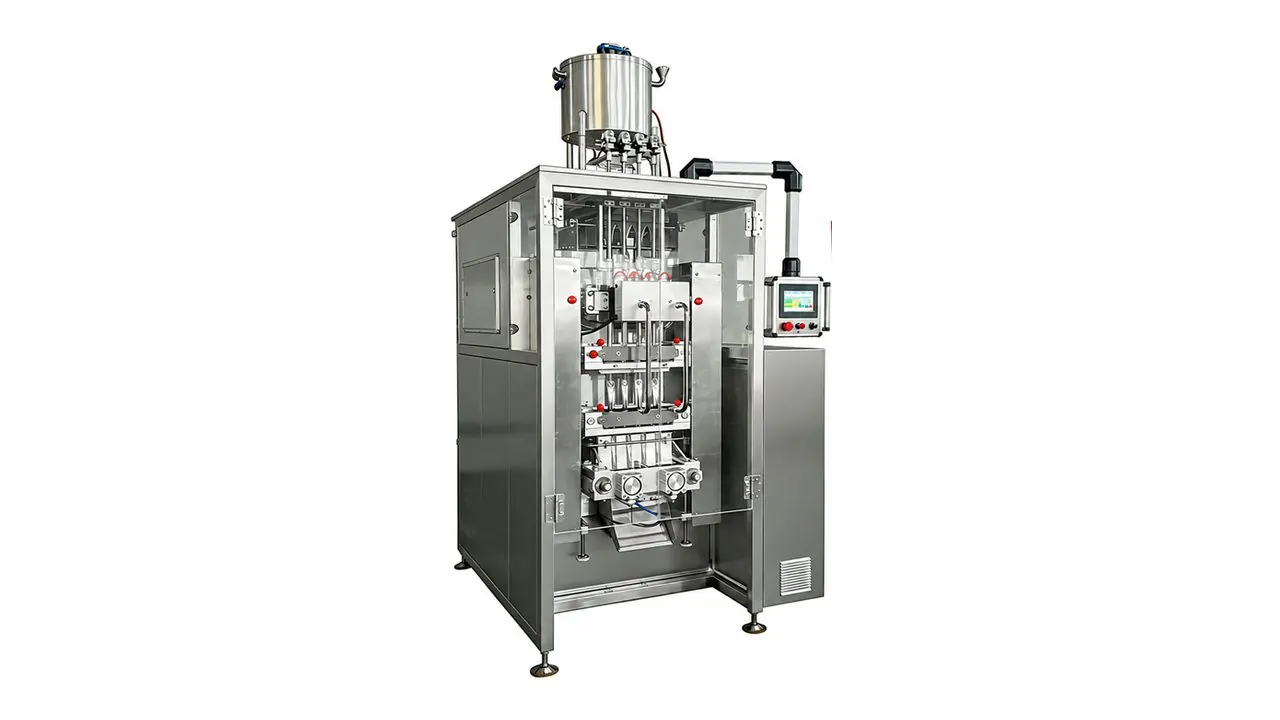
A sugar sachet packing machine fills a single portion of crystal sugar into a small flat sachet, usually 3-side or 4-side seal. Sugar is one of the easier products to dose because the crystals flow well. Caking from moisture and sugar dust at the seals are the two problems that make the difference between a reliable line and a frustrating one.
We judge output, portion range and seal quality from your own sugar and film, so a trial comes before any figure in a quotation.
White, brown and other crystal sugars
All crystal sugars are granular, but they do not behave alike.
- White granulated sugar is usually free-flowing, dry and consistent.
- Brown sugar is softer and often stickier because of the molasses it carries, so it clumps and clings to surfaces.
- Fine or caster sugar flows less freely and makes more dust.
- Coarse crystals and specialty sugars have irregular sizes that change how they fill a cup.
Tell us which sugar you pack and whether it varies from batch to batch. A sugar that behaves well in one lot may need a different setting in the next.
Crystal size, flow and moisture caking
Crystal size sets how freely sugar flows into the dosing cup and how much dust it makes. Moisture is the bigger risk. Sugar attracts water, and once it does the crystals bond into lumps that block the hopper, give uneven doses and stick to the seal. Room humidity, how long the sugar sits in the hopper and the film barrier all count.
Answer these before a trial:
- What is the typical humidity where the machine will run?
- How is the sugar stored before packing, and how long does it wait?
- Does the sugar carry an added ingredient, such as flavour, that changes how it flows?
Volumetric cup dosing or weighing?
For free-flowing crystals the common method is a volumetric cup. The cup fills with sugar, levels, and drops the dose into the sachet. It is simple and fast. Each dose weighs what the sugar density dictates, so a change of lot, crystal size or moisture shifts the weight even though the volume stays the same. Weighing systems measure each dose directly, but they add cost and complexity, and whether you need one depends on how tightly the portion has to be held.
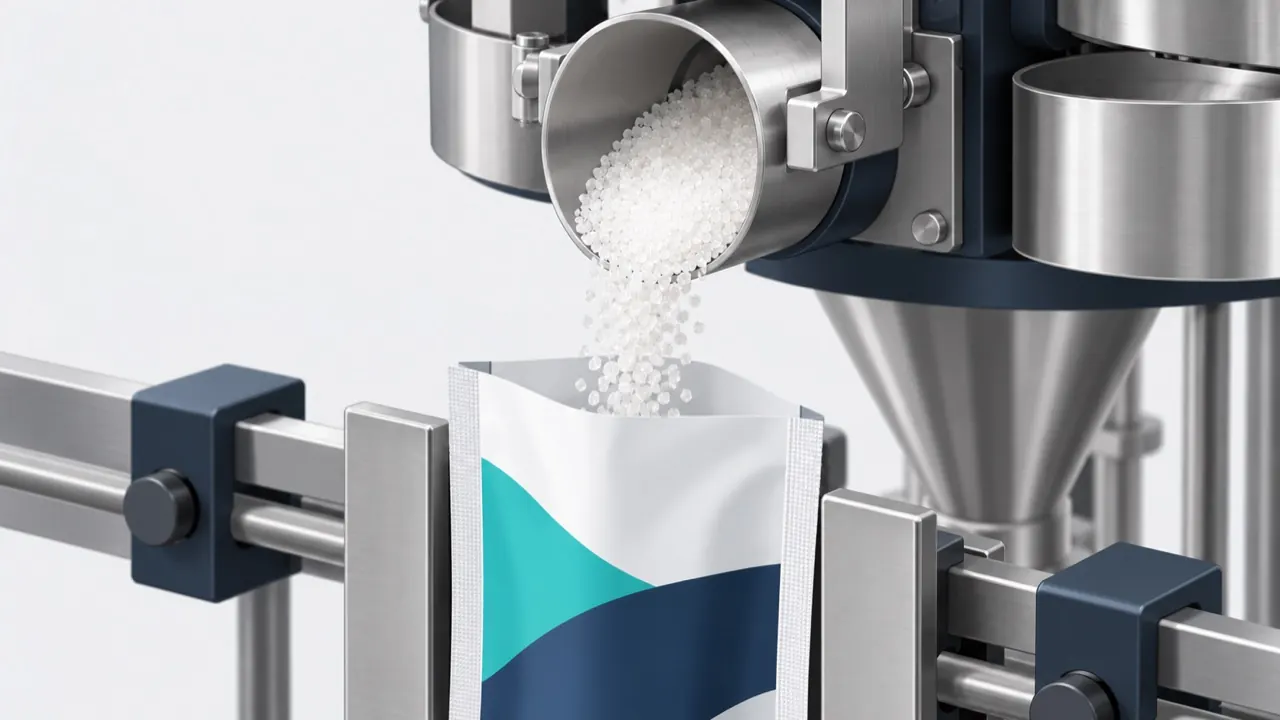
Illustration: a cup fills, levels and releases a fixed volume of sugar, so dose weight follows bulk density.
| Question | Volumetric cup | Weighing |
|---|---|---|
| How the dose is set | By volume of the cup | By weight of the portion |
| Sensitive to bulk density change | Yes | No |
| Complexity | Simpler | More complex |
| Best matched to | Consistent free-flowing crystals | Tighter weight requirements |
We do not promise a fixed accuracy. Weight consistency gets checked with your own sugar. The dosing principle is covered in more detail on our granule sachet machine page.
Sugar dust at the seals
Crystals shed fine dust, and sugar dust on the sealing area gives a weak or leaking seal. It also builds up on the jaws, so someone has to clean it off. A cleaner seal comes from controlling how sugar falls into the sachet, keeping the sachet mouth clear, and choosing a film and seal pattern that tolerate a little contamination. A 4-side seal sachet is a more enclosed pack, which suits portions that must stay tightly closed, but you still have to keep the seal area clean. A sugar trial checks the seal with your sugar, not with clean test material.
Packet or sachet: which word applies?
Different markets use different words. In many places a sugar packet is the flat pillow-style pack you get beside a hot drink, which is the same thing as a flat 3-side or 4-side seal sachet. Elsewhere people say packet for a larger retail pack. Give us the sachet size and the portion when you ask for a quotation, and do not rely on the word.
When a stick pack is wanted instead
Some sugar portions come in a long, narrow tube-like pack called a stick pack. It is a different format with different machinery, and the sachet vs stick pack guide compares the two. If a stick pack turns out to be the right call, a sister specialist site covers them and we can point you there.

Illustration: a flat sachet and a stick pack hold a similar portion in different shapes and are made on different machines.
Film and printing for food-service portions
Food-service sugar portions are usually printed because they carry a brand or a message. The film has to resist moisture so the sugar stays free-flowing, and it has to be suitable for food contact in your market, which we confirm per material and do not assume. Put print registration, sachet size and tear notch in your brief. If one machine must make several portion sizes, say so early.
For higher output, a multi-lane machine makes several sachets at a time. Film width, dosing and cutting limit the lane count, and the quotation confirms it.
What to send us
- the type of sugar and, if possible, a sample;
- portion weight and sachet size;
- sachet format: 3-side or 4-side seal;
- film material, print and tear requirements;
- target output and the number of lanes you expect;
- room conditions and how the sugar is stored.
Questions about sugar sachet machines
Can the same machine pack white and brown sugar?
Often, with different settings. Brown sugar is stickier and may need a different hopper or dosing setup. A trial with both shows what changes.
Why do my sugar sachets leak at the seal?
Usually sugar dust or a crystal caught in the seal, moisture, or a seal setting that does not suit the film. Clean the seal area and adjust the process, and most of these leaks stop.
Is sugar sachet packing different from salt or sweetener?
The principle is similar, but crystal size, flow and stickiness differ, so each product needs its own check. Powdered sweeteners are dustier than crystals.
Where do I start if I need a quotation?
Gather the items above and send them on WhatsApp. We look at your sugar and sachet before recommending a configuration.
Other products are listed in the full applications index.
LINEVO catalog example
Configurations from the LINEVO sachet catalog. Figures are catalog listings, not guaranteed performance: every value is confirmed for your product, film and sachet in the written quotation.
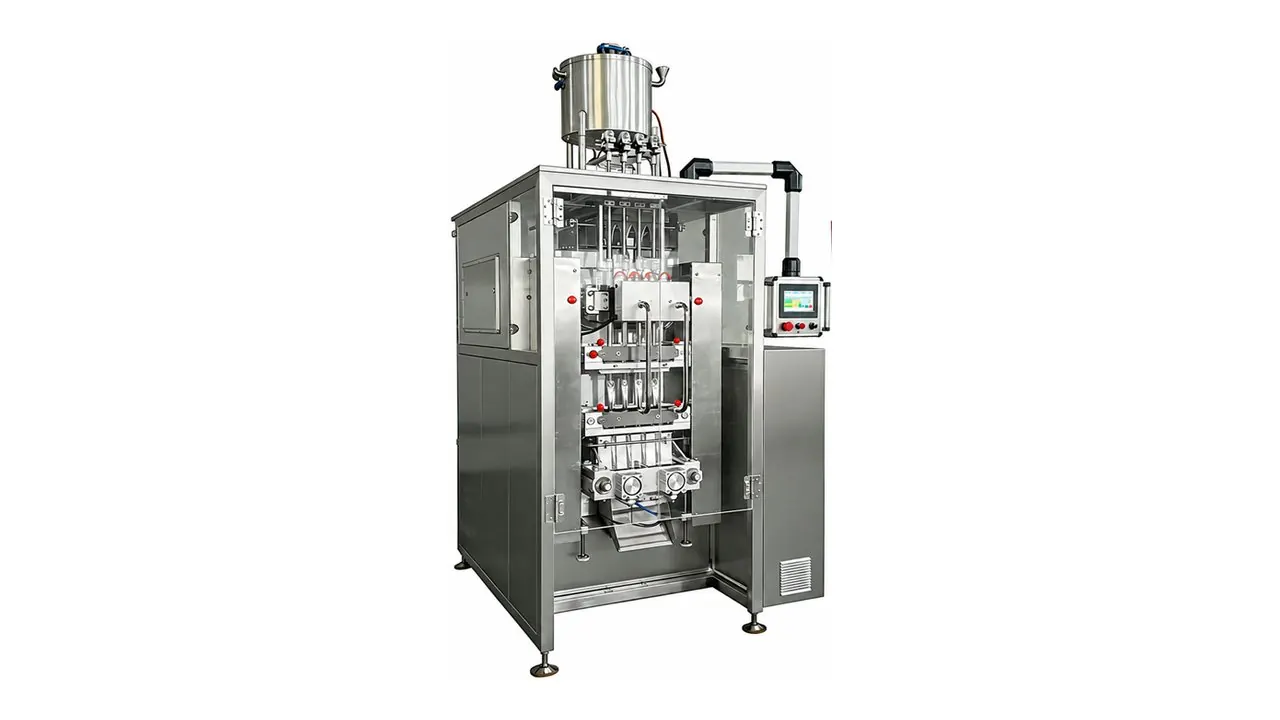
LV-350X
Four-side seal granule sachet machine
Listed products
Instant drink granules, herbal granules, sugar and seasoning packets
Catalog listing
- Fill range
- 1 to 50 g
- Sachet length
- 50 to 180 mm
- Sachet width
- 30 to 80 mm per lane
- Seal format
- Four-side seal
- Lanes
- Four lanes in one cycle (catalog description)
Product photographs: authorized catalog images shared by Dession, LINEVO's sister team in the same company. Original markings may appear.
Not sure which configuration fits your product?
Send your product and pack details, or ask for a trial on your own material before you decide.