

Powder Sachet Packing Machines
How to choose a powder sachet packing machine: flowability, auger dosing, dust in the seal area and film, plus what to send us for a trial and quote.
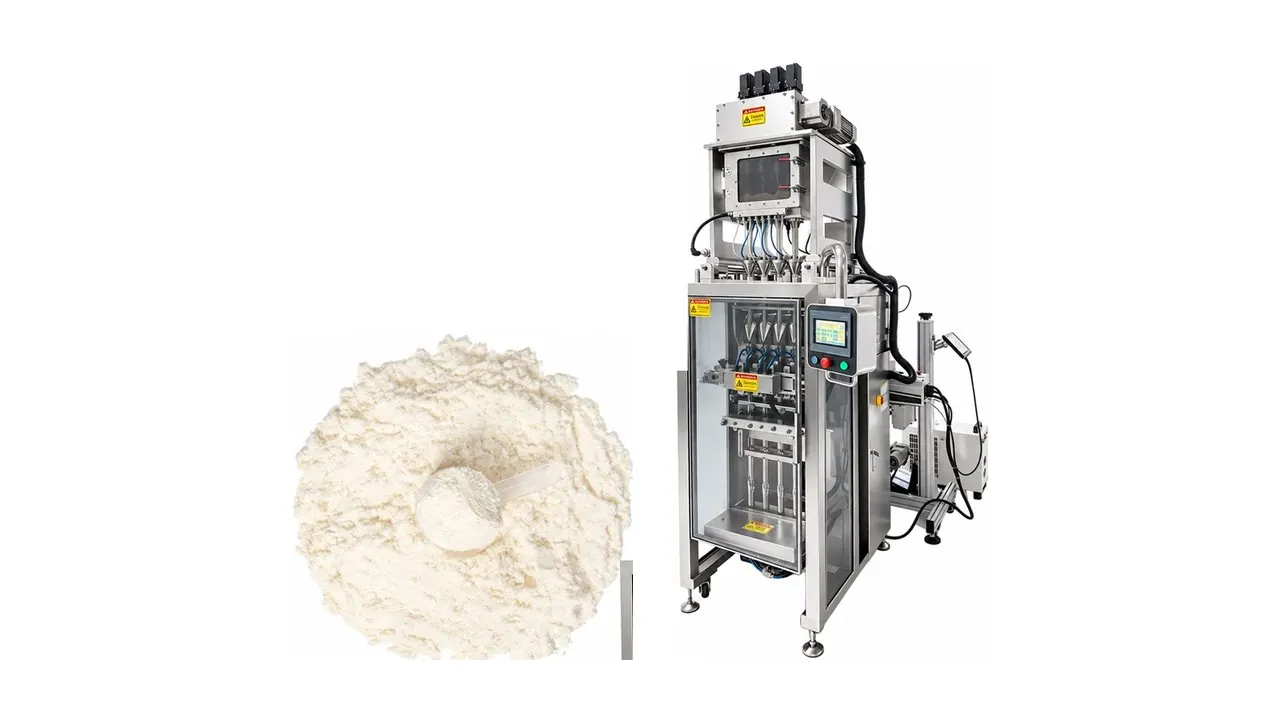
A powder sachet packing machine forms flat sachets from film, doses a measured amount of powder and seals the pack. The forming and sealing are the easy part. What causes trouble is the powder itself: how it flows, how much air it carries, how much dust it throws at the seal, and whether it clumps or clings to the film with static. Those behaviours decide the dosing method and the configuration, so we start with your powder and work back to the machine.
How tightly your powder packs into the auger decides the dose weight, so we weigh sachets made from your own powder before we put a tolerance in writing. Speeds and dose ranges are not quoted on this page for the same reason.
Which powder products are you packing?
"Powder" covers very different materials. Place yours on a scale from free-flowing to cohesive.
- Free-flowing powders pour readily and level out in a hopper. Fine salt and some milk or sugar powders behave this way. If your product is more granular than powdery, look at granule sachet packing machines, where cup dosing and particle size take the lead.
- Cohesive powders form bridges, stick to walls and come out in lumps. Many protein, spice, cocoa and flavour powders fall here.
- Aerated or very fine powders hold air, change volume when handled and throw dust.
- Hygroscopic powders absorb moisture and can cake in the hopper or on the sealing jaws. Instant coffee mixes are the usual example, and coffee sachet applications go into them.
Beverage mixes, seasonings, nutritional powders, sweeteners and cosmetic powders all run on these machines. Whether your particular powder runs on a particular machine is something you find out by testing it. The category name does not tell you.
Sachet formats and machine configurations
Powder sachets are usually 3-side or 4-side seal packs. The choice is mostly about appearance and seal strength. 4-side seal sachets have a seal on every edge, which suits powders that must not leak at the corners.
Configurations differ in a few ways:
- A single-lane machine makes one sachet per cycle. It suits smaller volumes or wide sachets.
- A multi-lane machine makes several sachets across the film width per cycle. Lane count is capped by sachet width, film width and the dosing hardware that has to fit across it. Settle the sachet width before you plan lanes, and read how multi-lane output is estimated.
- The dosing module follows the powder, not the sachet. Auger dosing is the usual starting point for powders.
If you want the whole sequence from film roll to finished pack, how sachet packaging machines work walks through it.
Dosing options and product behaviour
Auger dosing
An auger filler is a rotating screw in a tube. Each revolution, or part of one, pushes out a set volume of powder. It is the common choice for fine and cohesive powders because it moves product positively instead of waiting for gravity. The screw and tube are sized to the dose and to the powder.
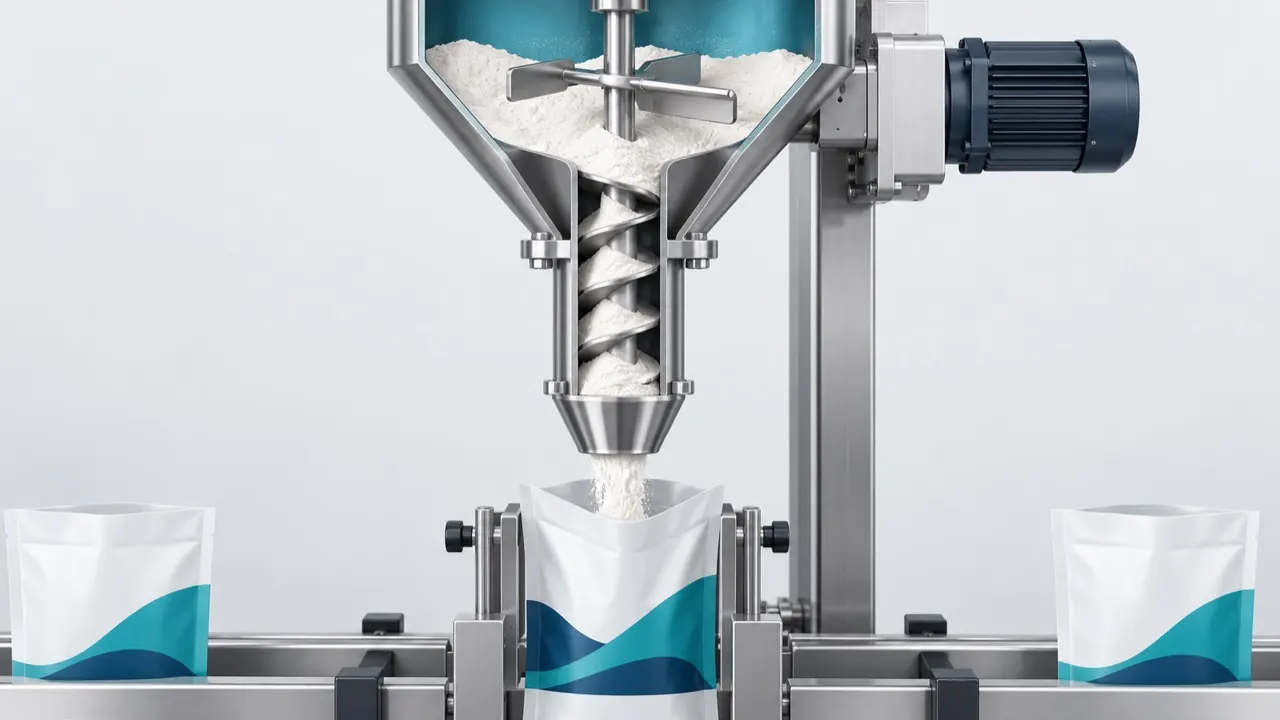
Illustration: the screw turns inside the tube, and each turn pushes a repeatable volume of powder down into the forming tube.
An auger measures volume, but you sell grams. How densely the powder sits in the screw flights sets the weight, which is why the properties in the table below matter.
| Property | Why it matters | What to check |
|---|---|---|
| Flowability | Poor flow bridges in the hopper and fills the screw unevenly | Whether the hopper needs an agitator or similar aid |
| Free-flowing vs cohesive | Free-flowing powder can run on after the screw stops, and cohesive powder clumps | Screw design and stop behaviour on your powder |
| Aeration | Air-filled powder is light and compresses unpredictably | Whether it settles or fluidises when it moves |
| Bulk density changes | The same volume weighs more or less if density shifts between batches | The density range of your real batches |
| Static | Fine powders cling to the film and the tube | Film type and tube surface |
| Dust | Dust settles on the film and can reach the seal | Dust control and extraction options |
Other methods exist. Volumetric cup dosing suits some free-flowing materials, and weighing systems make sense when weight accuracy is the priority. Pick by powder and by the tolerance you need, and always quote a tolerance together with the conditions it was measured under.
Dust in the seal area
Powder trapped between the sealing surfaces is one of the most common causes of weak or leaking seals. Fine, dry, aerated powders are the worst offenders. When product strings down from the nozzle as the jaws close, it lands right on the film that has to fuse.
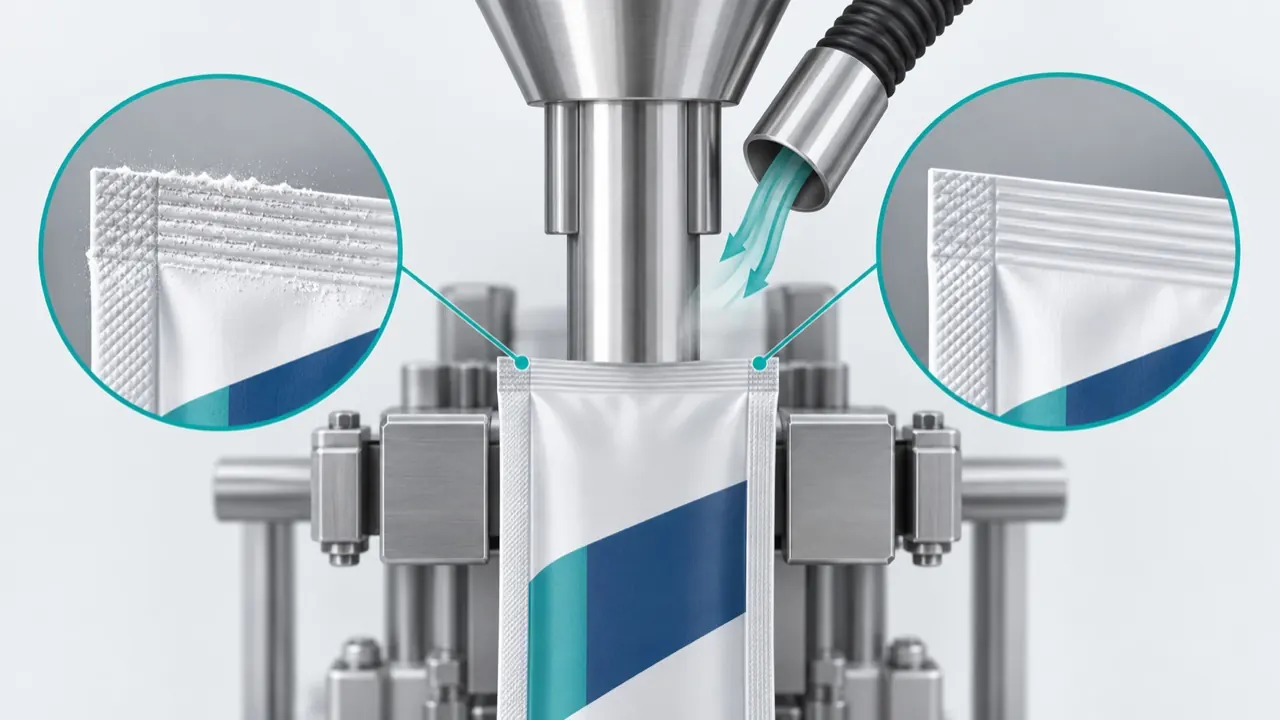
Illustration: powder caught in the seal zone stops the film layers from fusing along the full width of the seal.
You can reduce it by controlling how the powder drops into the tube, by using a seal pattern and film that tolerate some contamination, and by extracting dust near the jaws. How much of that you need depends on the powder, and you only learn it by running the powder.
Film, sealing and cleaning
Film sets the sealing temperature window, how well the seal tolerates dust, the barrier and the look of the pack. Barrier comes from how sensitive the powder is to moisture, oxygen and aroma loss. The sachet packaging machine selection guide shows how product, film and format decisions depend on each other.
Cleaning matters every time you change powder, allergen or flavour. Ask about:
- how much of the product path opens up for wiping, and how long that takes;
- which parts touch the product and what they are made of, since food-contact suitability has to be confirmed machine by machine;
- how dust is contained so it does not spread through the machine and the room;
- guarding and access during cleaning.
We do not state a cleaning standard or compliance claim here. What applies in your market gets checked against the specific configuration in the quotation.
Product trial
A datasheet will not tell you how a powder behaves. A product and film trial shows how your powder doses, how the seal holds on your film, and whether dust or static causes problems. Bring the powder as it comes off your line, not a cleaned laboratory sample, and bring the film you plan to use if you have one.
What to send for a quote
We need:
- the product name, and whether it is a single powder or a blend;
- how it behaves: free-flowing or lumpy, dusty, sticky, hygroscopic, static;
- bulk density or a rough figure, and how much it varies between batches;
- the target dose per sachet in grams;
- sachet type (3-side or 4-side seal), approximate size and preferred film;
- target output, ideally as sachets per minute, and the lane count you have in mind;
- any food, pharmaceutical or cosmetic requirements that affect materials and cleaning.
If you are unsure about output, start from lane count and cycle rate. Cost components and what a quotation covers are in sachet packaging machine price.
Questions about powder sachet machines
What is the best dosing method for powder sachets?
There is no single best method. Auger dosing is the usual choice for fine and cohesive powders. Free-flowing powders may suit cup dosing, and weighing comes in when weight accuracy is critical. Your powder and your tolerance decide.
Why does the sachet weight vary with an auger filler?
An auger fills by volume. If the powder is aerated, or its bulk density changes between batches, the same volume weighs a different amount. Steady feeding into the screw and a check on batch density both help.
How do you stop powder from ruining the seal?
Cut the dust at the point of fill, choose film and seal settings that tolerate a little contamination, and extract dust near the jaws. Then check the seal on your own product.
Can one machine pack different powders?
Sometimes, within limits. Different powders can need different screws, tubes or settings, and changeover cleaning takes time. List every powder you plan to run when you ask for a quote.
LINEVO catalog example
Configurations from the LINEVO sachet catalog. Figures are catalog listings, not guaranteed performance: every value is confirmed for your product, film and sachet in the written quotation.
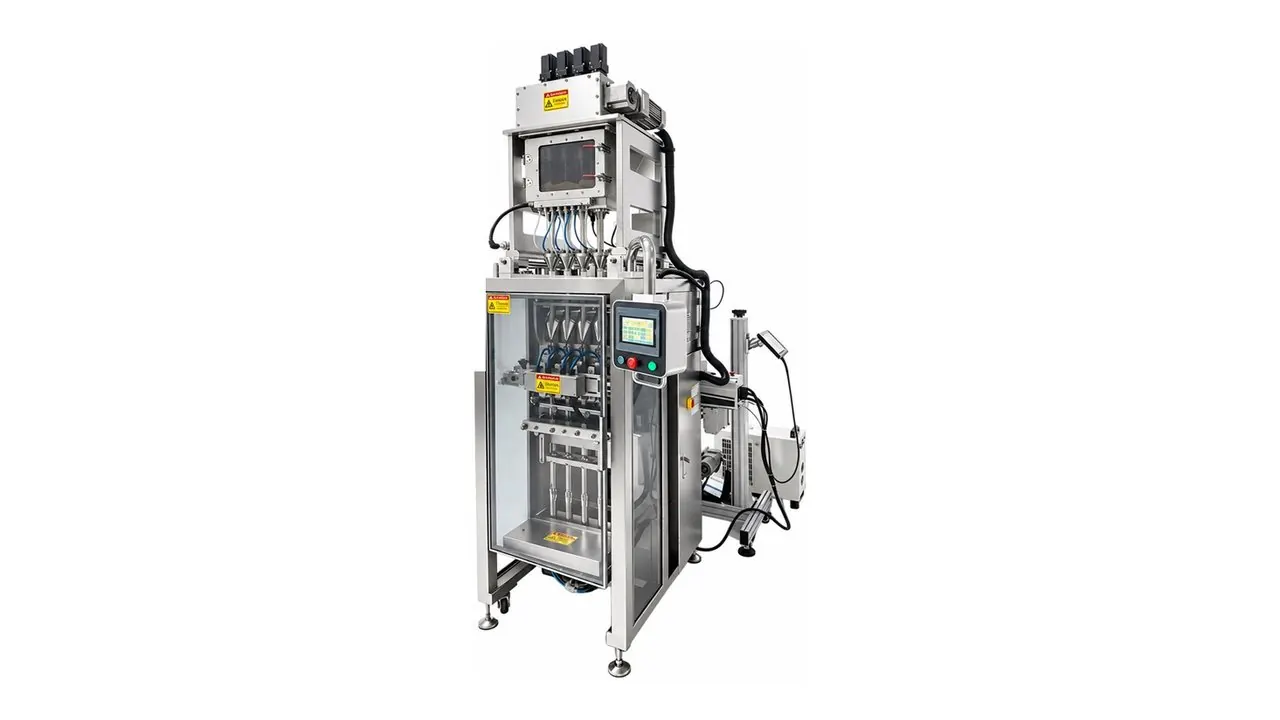
Multi-lane powder sachet machine
Servo auger filler, four-side seal
Listed products
Protein mixes, collagen and meal-replacement powders
Catalog listing
- Dosing
- Independent servo auger per lane
- Seal format
- Four-side seal, multi-lane
LINEVO publishes no reviewed ratings for this configuration; output, sachet range and utilities are confirmed in the quotation.
Product photographs: authorized catalog images shared by Dession, LINEVO's sister team in the same company. Original markings may appear.
Not sure which configuration fits your product?
Send your product and pack details, or ask for a trial on your own material before you decide.