

Sachet vs Stick Pack: Choosing a Single-Serve Format
Sachet vs stick pack: how shape, printable area, opening, film use, seals and machines differ, with a decision table to help you pick a single-serve format.
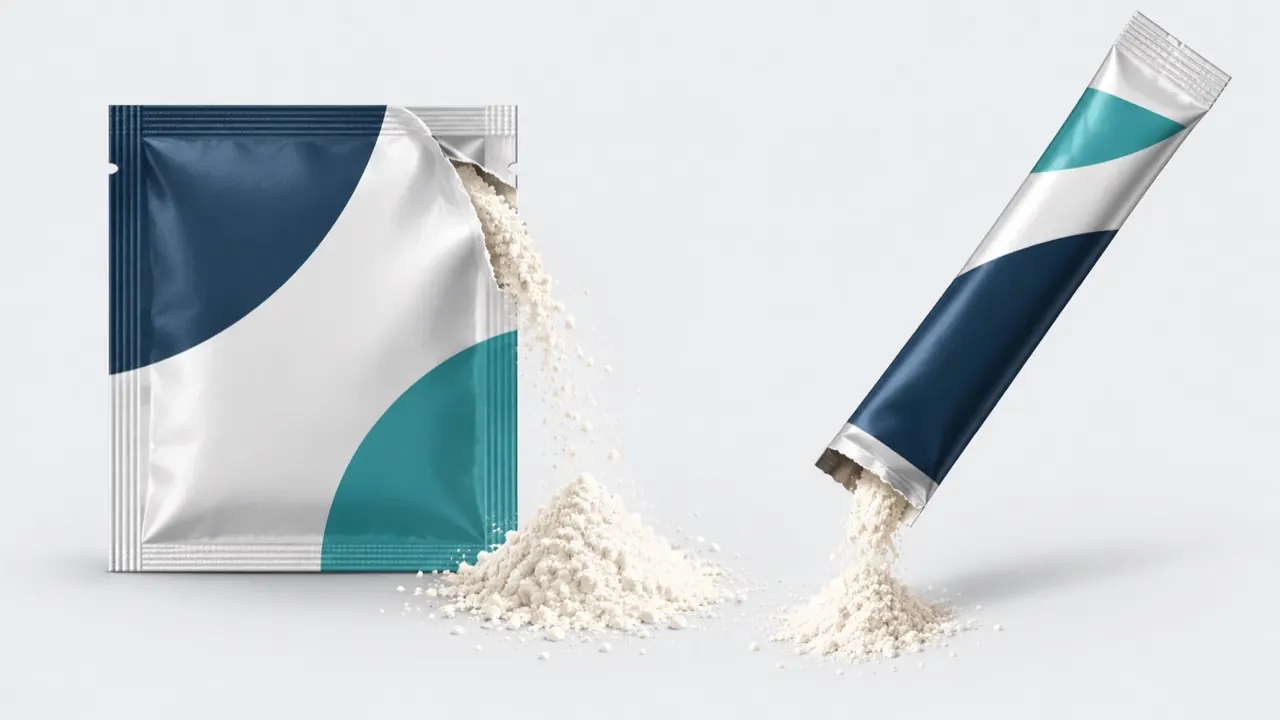 Illustration
A flat sachet is a wide, pouch-like pack with a big printable face. A stick pack is a long, narrow tube that pours in a thin line. Neither wins in general. It comes down to the product, how people use it and how it is displayed. We start from a flat-sachet project here and compare the two, so you know which one to bring to us.
How do shape and printable face differ?
A flat sachet has two broad faces, which suits detailed artwork, instructions and display on a shelf or a hotel tray. A stick pack is narrow and long, so the printable area is smaller and the design tends to be more graphic. Sticks stand up in tall boxes, while flat sachets lie flat in cartons.
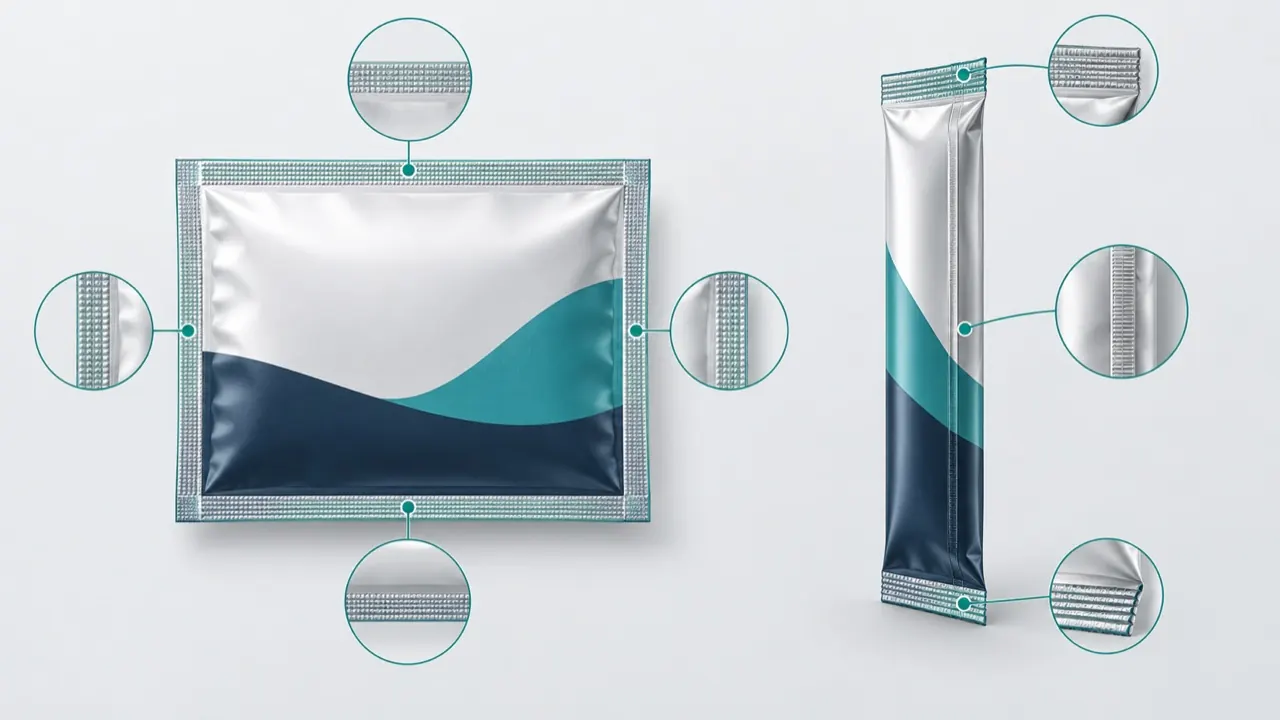
Illustration: the flat sachet gives you a broad face, the stick pack a long narrow one.
How do opening and pouring behave?
You tear a flat sachet at the notch and pour from a wide opening. Product comes out fast, and some may spill if the pack is thin or the opening is wide. A stick pack opens at the end and pours from a narrow mouth, which gives a controlled flow into a cup or glass. Many people prefer that for drinks. With pastes and liquids it flips: a flat sachet can usually be squeezed empty, and a thin stick may be hard to empty.
Which products suit each format?
Both formats can carry powders, granules and some liquids, but each has habits. Flat sachets work well for sugar, sweeteners, condiments, sauces, shampoo, cosmetic samples and dry mixes, especially when the portion is larger or the user squeezes the pack. Stick packs are common for instant drinks, supplements, flavour powders and sweetener, where the use is a measured pour into a cup.
To see how product drives the format, read about coffee products in sachets and what matters for sugar sachets.
How do film use and seals compare?
Film use per pack depends on shape and portion, and there is no universal winner. A narrow stick can use less film for a small portion, while a flat sachet usually carries more seal and margin area around the same content. Seal layouts differ as well. Flat sachets are commonly sealed on three or four sides, though not every sachet has to be one of those two. A stick pack usually has a fin or lap seal along the back and a cross seal at each end. Film choice, barrier and seal quality matter in both formats, and a run with your own film is the only way to settle them.
How do machine configurations differ?
Flat sachets are often made on multi-lane flat-sachet machines, which form several sachets across one wide film web and suit high-volume output. Stick packs are made on dedicated stick-pack machines that form a narrow tube from a slit film and seal it across. For the flat-sachet side, see our multi-lane machine page and the 4-side seal sachet page. A sister specialist site covers stick-pack machines in more depth, and it is the better place to study that format.
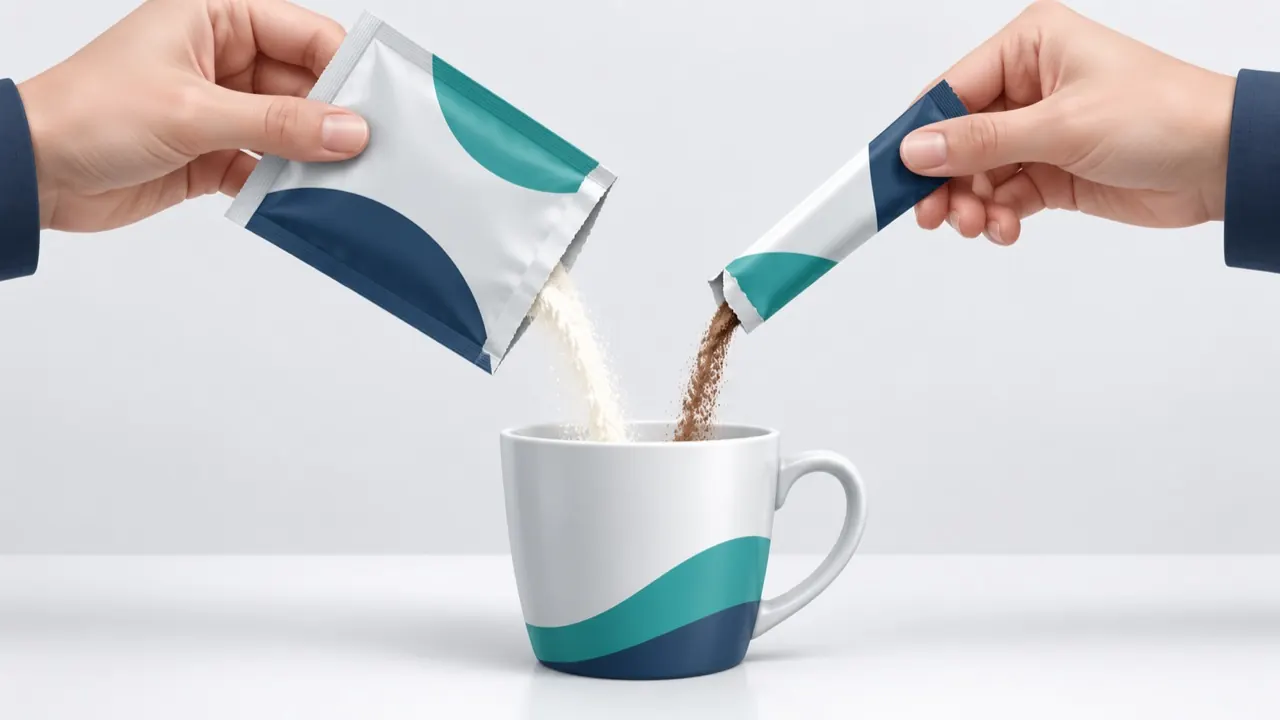
Illustration: a wide tear-and-pour for the sachet, a narrow pour for the stick.
Hygiene and cleaning apply to both formats. Food-contact materials and cleaning access have to be confirmed per machine, and guarding and operator safety are part of any configuration we recommend.
Which format fits? A decision table
| Question | Leans flat sachet | Leans stick pack |
|---|---|---|
| Do you need a large printed face for artwork or instructions? | Yes | Less important |
| Is the product poured into a cup or bottle? | Possible | Often a good fit |
| Is the product a paste, sauce or liquid squeezed out? | Often a good fit | Check carefully |
| Do you need high output from several lanes in one film web? | Common option | Different machine type |
| Is the pack shown flat on a shelf or tray? | Good fit | Less natural |
| Do you want tall, stackable retail boxes? | Possible | Good fit |
Treat the table as a starting point. Your product, portion and brand needs can change the answer.
When does each format fit?
Choose a flat sachet when the face matters, the product is squeezed or tipped out, or high output from many lanes is the goal. Choose a stick pack when a narrow, controlled pour matters and the pack is mostly a measured dose into a drink. If it is still unclear, test both with your product. Our buying guide for sachet machines covers the wider selection steps.
What should we do next?
If a flat sachet looks right, tell us your product, portion and film, and run a trial with your product and film so you can hold the pack. When you want pricing, send a quotation request on WhatsApp.
Questions about sachets and stick packs
Is a stick pack just a thin sachet?
No. It is a different pack structure with its own seals, made on a different type of machine, though both are single-serve formats.
Which uses less film?
It depends on portion and size. Compare real dimensions and film structure for your product instead of leaning on a general rule.
Can one machine make both formats?
Usually not. Flat sachets and stick packs normally come from different machine types, so settle which one you need before comparing quotations.
Which is better for coffee or sugar?
Both are used in practice. It comes down to how the product is poured, how it is displayed and which machine suits the volume.
Not sure which configuration fits your product?
Send your product and pack details, or ask for a trial on your own material before you decide.