

Bleach Sachet Packaging Machines: Wetted Parts, PTFE Seals & Film Qualification
Published by the LINEVO sachet equipment team. Technical questions and corrections
Compare bleach sachet packaging machines: review wetted parts, seals, dosing and film qualification, then prepare a formulation-specific quotation brief.
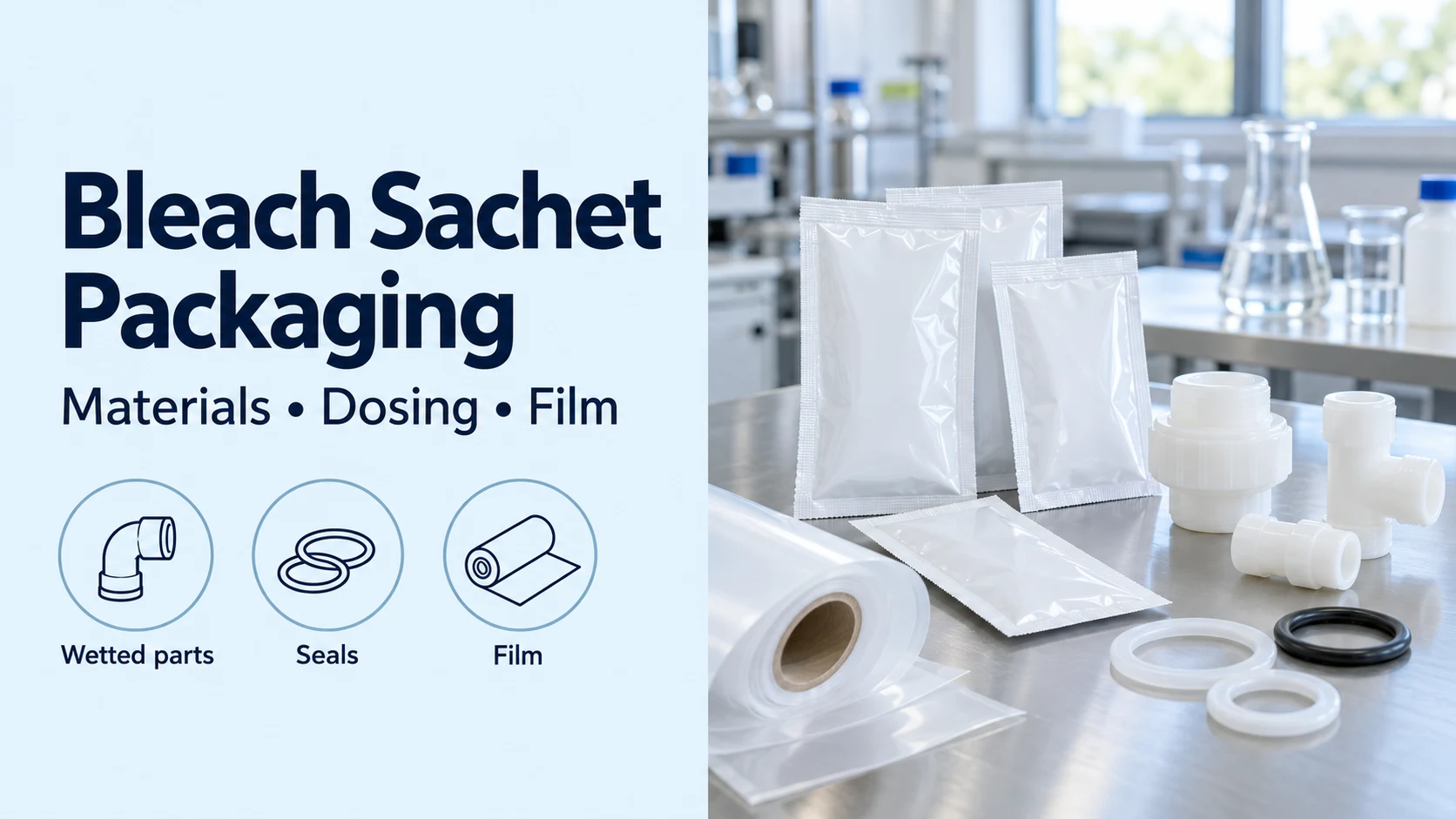
Choose bleach sachet packaging machines by reviewing the formulation, the complete product-contact path and the finished pack together. Start with a written materials schedule, a dosing observation plan and a film qualification record before selecting a configuration.
For sodium hypochlorite sachet packing, use the following questions alongside the liquid sachet machine family. Keep the proposed machine, formulation and film identified throughout the review.
| Review area | Request with the proposal | Decision to record |
|---|---|---|
| Product | Formulation identity, concentration, intended temperature and handling conditions | Which formulation and conditions are being evaluated? |
| Wetted parts | Component-by-component material grades and seal compounds | Which components have compatibility evidence? |
| Dosing | Proposed pump, feed arrangement, nozzle and trial observations | What happened during filling, stopping and restarting? |
| Film | Complete construction, product-contact layer and filled-pack evaluation | Which package and acceptance criteria are being assessed? |
Review the wetted parts before choosing the machine
Pitting or crevice corrosion can occur on most stainless steel grades in a 5% solution at ambient temperatures.
There is an additional risk of stress corrosion cracking at higher temperatures.
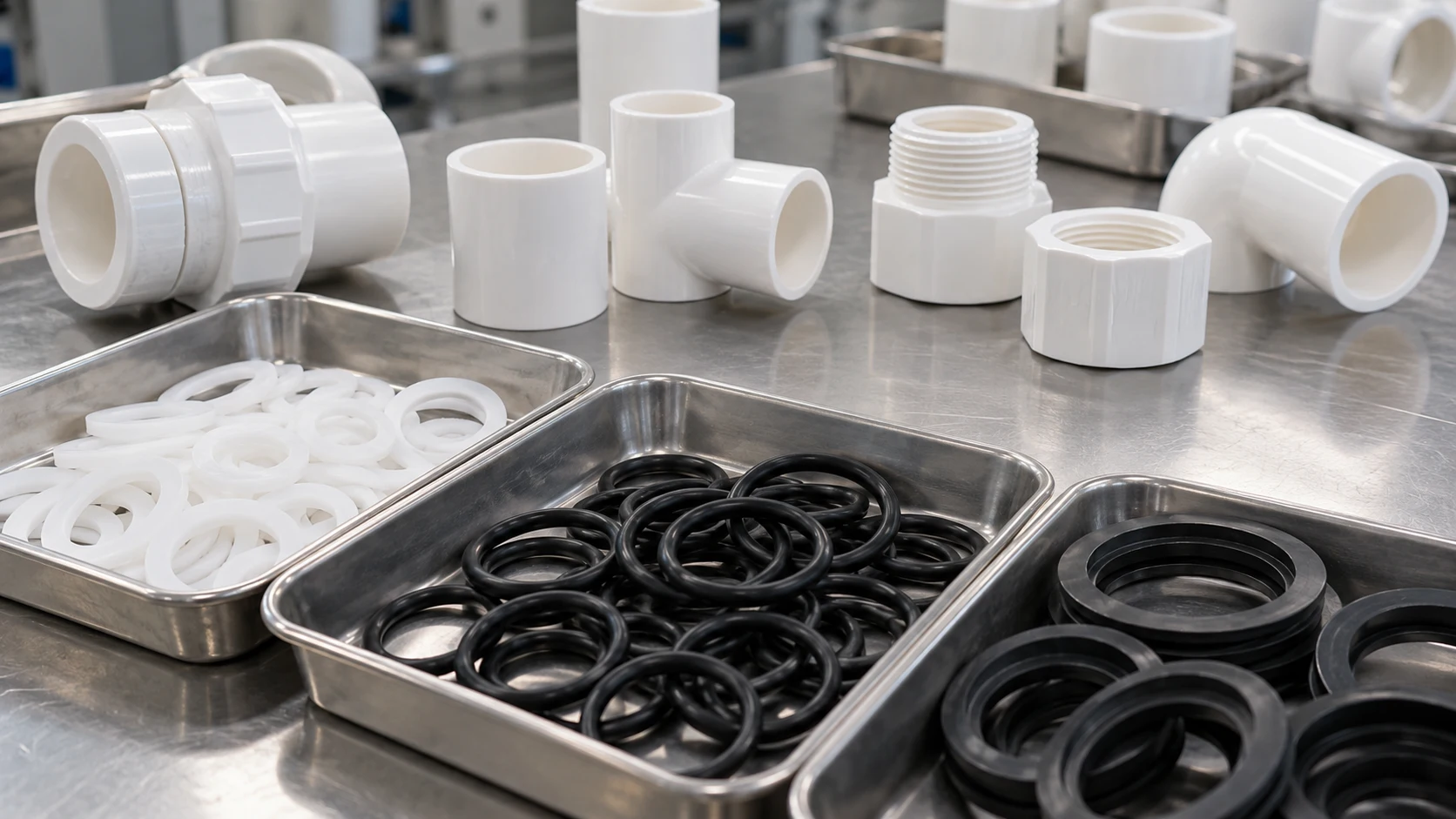
List the proposed reservoir, pump head, valves, hoses, fittings, nozzle, gaskets and seals. Request the exact grade or compound for each item; attach the formulation and exposure conditions to the materials review.
Exposure time and chemical concentration can affect chemical resistance.
Certain combinations of chemical exposure and mechanical load can induce stress cracking in many otherwise chemically resistant materials, both metallic and nonmetallic.
Where do PTFE seals and other material candidates fit?
Use the following transfer-system material guidance when preparing questions about the proposed contact path.
OxyChem lists PVDF among compatible materials for sodium hypochlorite solutions or linings.
OxyChem lists PTFE among compatible materials for sodium hypochlorite solutions or linings.
OxyChem lists EPDM rubber among compatible materials for sodium hypochlorite solutions or linings.
PTFE lined or PVC quarter-turn plug or ball valves are recommended for sodium hypochlorite service.
For each proposed seal, request its compound designation, contact conditions and supporting compatibility evidence. For each valve, record the body, lining and seal materials separately. Keep the component decision tied to the actual formulation and proposed operating conditions.
Check dosing during operation and restart
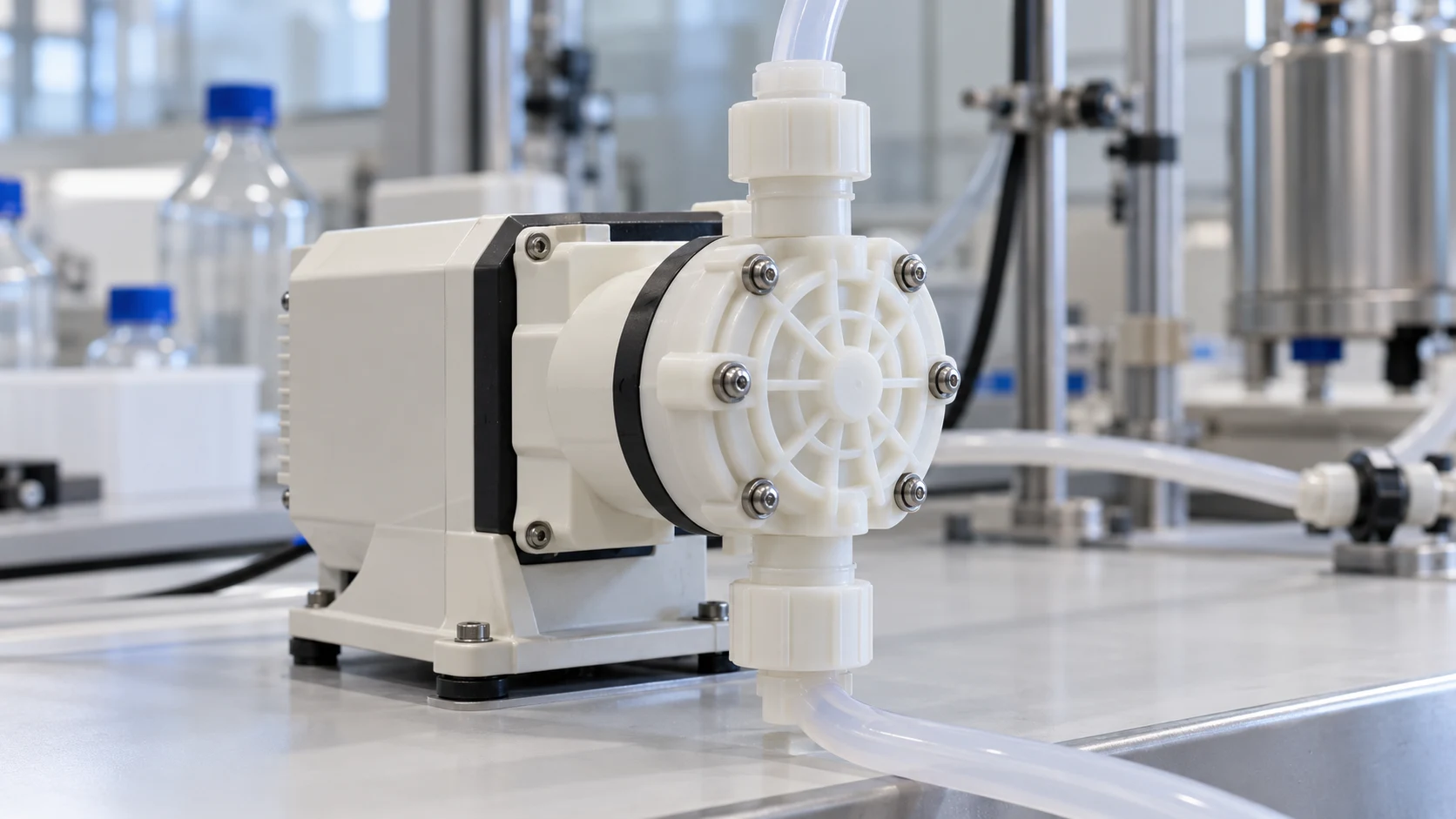
Include the proposed feed and dosing arrangement in the review of a corrosive liquid sachet filling machine. Record the product condition at the start of the trial and after a planned stop.
Higher temperatures increase the decomposition rate of hypochlorite solutions.
In a diaphragm-pump review, include gas accumulation and discharge observations.
Gas can accumulate in the upper interior of a diaphragm pump head.
In gas lock, gas is compressed in the pump head but no liquid is discharged.
Ask for a trial record covering startup, steady filling, stopping and restart. Record the delivered dose, any visible gas, nozzle cut-off and the location of any drip. Specify the acceptance criteria before collecting results. For the broader dosing comparison, see piston versus gear pump sachet filling.
Ask the proposal to describe the relationship between filling and sealing. Will the seal be made above the fill level, or will the process displace liquid from the sealing region? Request a demonstration using the proposed process and laminate, and record the observed seal condition.
Qualify the chlorine-resistant film proposal
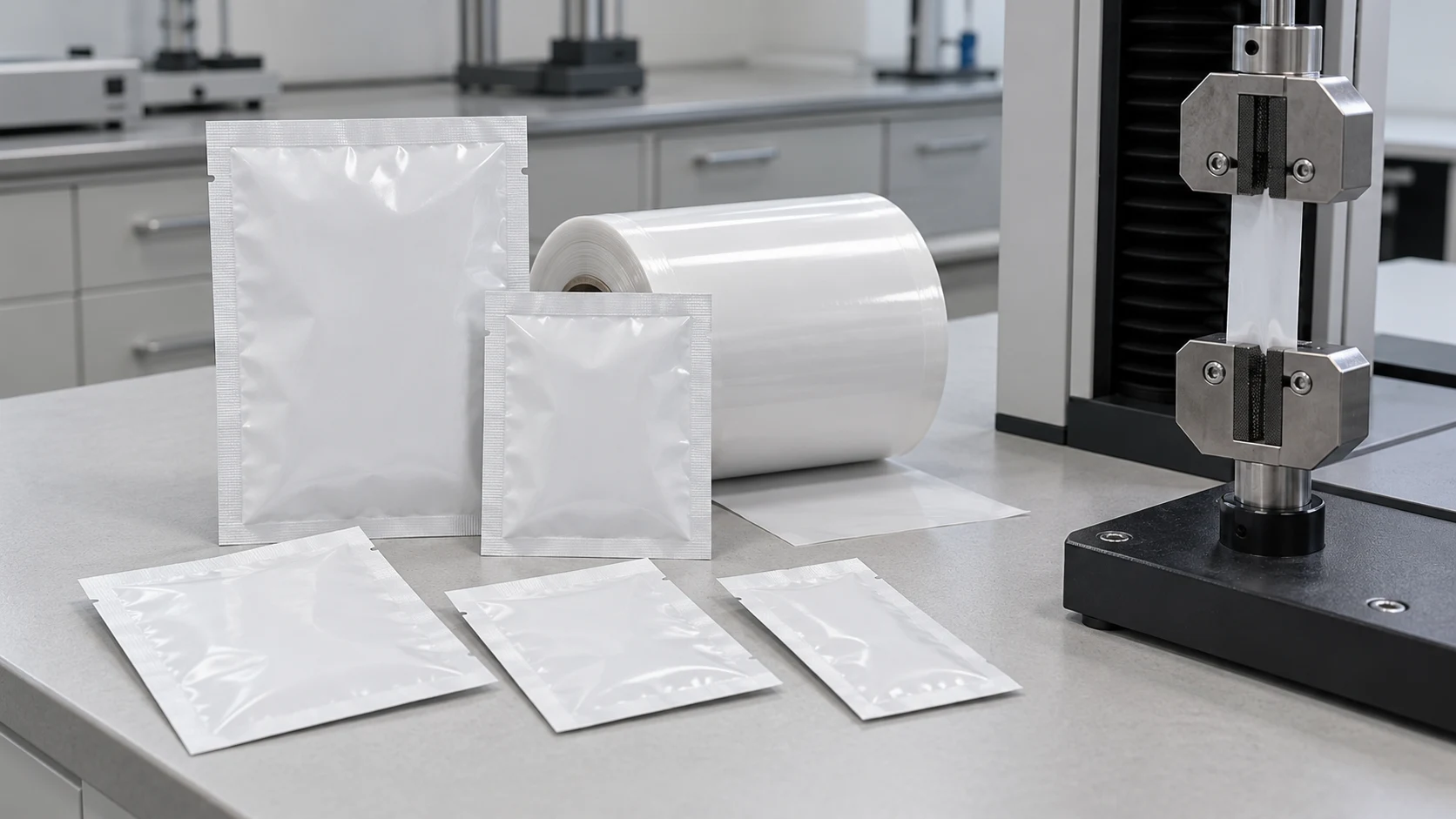
Request the complete laminate construction and the proposed product-contact layer. Include the adhesive system, sealant and intended storage conditions in the film review. Ask for the filled-pack evaluation, with the formulation and film reference recorded together.
Sunlight catalyzes hypochlorite decomposition.
Opaque containers reduce decomposition of hypochlorite solutions due to light.
Review light protection alongside chemical compatibility and package testing. Ask the film proposal to identify the evidence for each requirement, then agree the filled-pack aging conditions and acceptance criteria. Record leakage, package deformation, delamination and retained product properties as evaluation fields.
Separate seal-force measurement from gross-leak examination
For the seal-strength test described in the ASTM public scope:
The test measures the force required to separate a test strip containing the seal.
The test identifies the mode of specimen failure.
For the internal-pressurization gross-leak test described in the ASTM public scope:
Internal pressurization provides a practical way to examine packages for gross leaks.
Method sensitivity has not been evaluated for nonporous packaging.
Name the selected method and package applicability in the trial record. Agree the pass criteria for the proposed pack before testing. Use the sachet sealing problems guide for the separate troubleshooting discussion.
Prepare a formulation-specific quotation brief
When requesting a chemical liquid sachet machine proposal, send the following packet:
- Product identity, safety data sheet, formulation information and concentration.
- Intended handling temperature, storage conditions and expected contact periods.
- Target dose, sachet drawing, output requirement and intended operating schedule.
- Proposed wetted-parts schedule, exact material grades and seal compounds.
- Film specification, product-contact layer and available compatibility records.
- Required dosing observations, package tests and acceptance criteria.
For trial planning, review the sample-testing page and ask about arrangements for your chemical product before sending material. Request a bleach sachet quotation with your formulation, contact-material requirements and film details.
Sources
- BSSA — Selection of stainless steels for handling sodium hypochlorite
- Arkema — Chemical Resistance & Fuel Resistance
- OxyChem — Sodium Hypochlorite Handbook
- TACMINA — What is Gas Lock?
- ASTM — Seal Strength of Flexible Barrier Materials, public scope
- ASTM — Detecting Gross Leaks in Packaging by Internal Pressurization, public scope