

Shampoo Sachet Packing Machines
Shampoo sachet packing machine guidance: controlling foam, stringing and drips, cleaning between fragrances, print registration with eye-marks, and seal integrity.
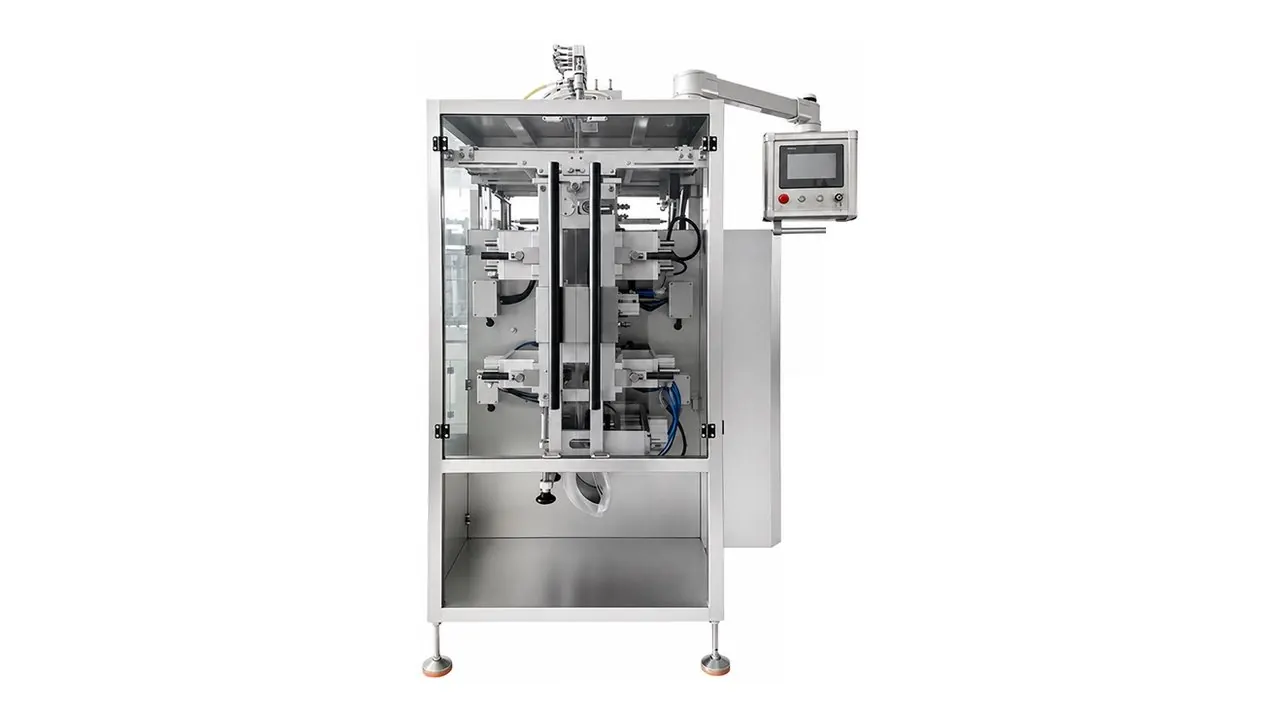
A shampoo sachet packing machine fills a measured dose of shampoo into a printed flat sachet and seals it cleanly. Shampoo looks easy because it is a liquid, but it foams when it moves, it can string or drip at the nozzle, and the printed film has to stay lined up with the cut. For general equipment selection, start with the liquid and paste sachet machine page.
How is foaming controlled?
Shampoo contains surfactants, so turbulence makes foam. Foam in a sachet makes the dose unreliable, because what you meter is part liquid and part air, and it can rise into the seal area. The formula, the pump type, the speed of the filling stroke, the drop from nozzle to sachet and the way product leaves the hopper all feed into it.
What works in practice is a gentler fill, a nozzle that delivers product low in the sachet, a controlled pump speed and a feed path that doesn't pull in air. Whether that is enough depends on your formula, so we run it before we promise anything.
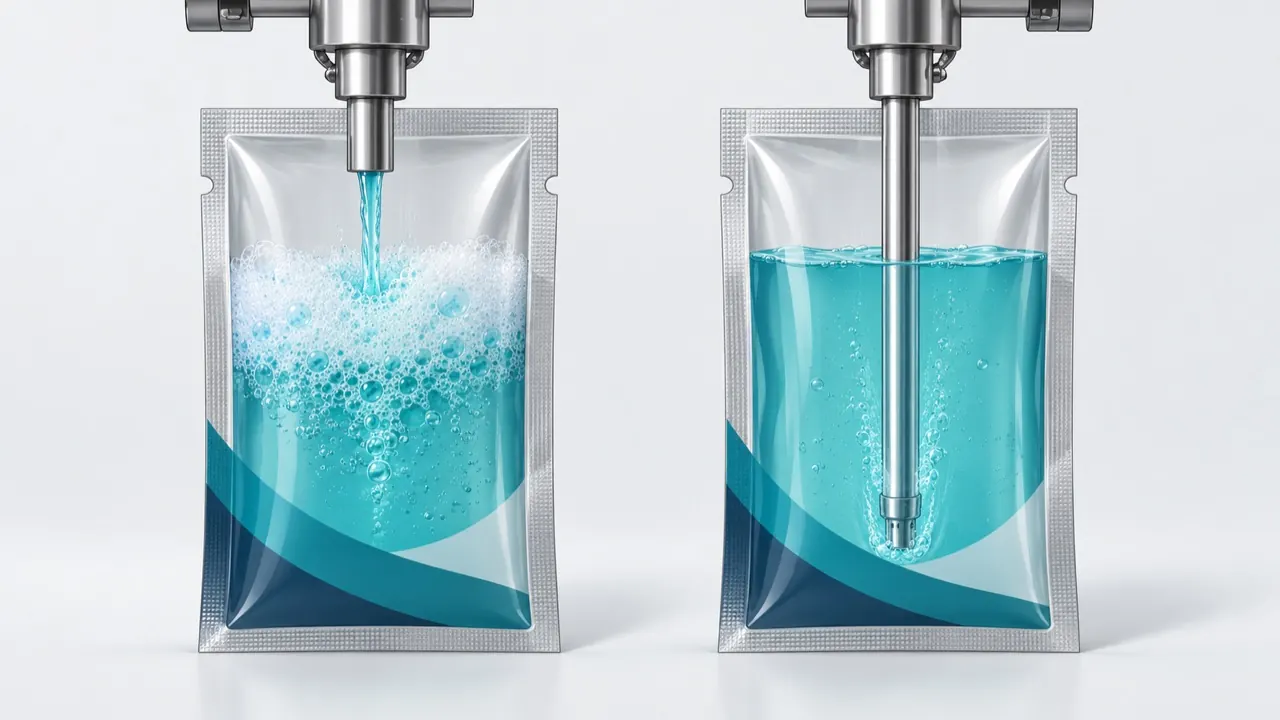
Illustration: a calmer, lower fill makes less foam, so the dose stays stable and the seal area stays clear.
Stringing and dripping at the nozzle
Many shampoos, especially thicker or pearlised ones, leave a tail of product as the nozzle finishes the dose. The tail can fall into the seal area. Even a thin film of shampoo between the jaws weakens the seal, and the pack can leak later. Nozzle design, how the dose ends and the timing between fill and seal all affect this. Test with your product, not with water, because water doesn't string.
Cleaning between fragrances and colours
Personal-care ranges often run several fragrances or colours on one line. Every change means cleaning the product-contact parts so fragrance and colour don't carry over. When you compare configurations, ask how many parts touch the product, how they come off, and how long a changeover takes. Check product-contact materials, including any your cosmetic requirements call for, machine by machine. Keep the guards in place and follow your own cleaning procedure.
Print registration with eye-marks
Shampoo sachets are usually printed, and the print has to line up with the seal and the cut. An eye-mark is a small printed mark on the film that a sensor reads to position the print on each sachet. If the mark is unclear, the film stretches, or the print repeat differs from the sachet length, the design drifts and the cut can land in the artwork.
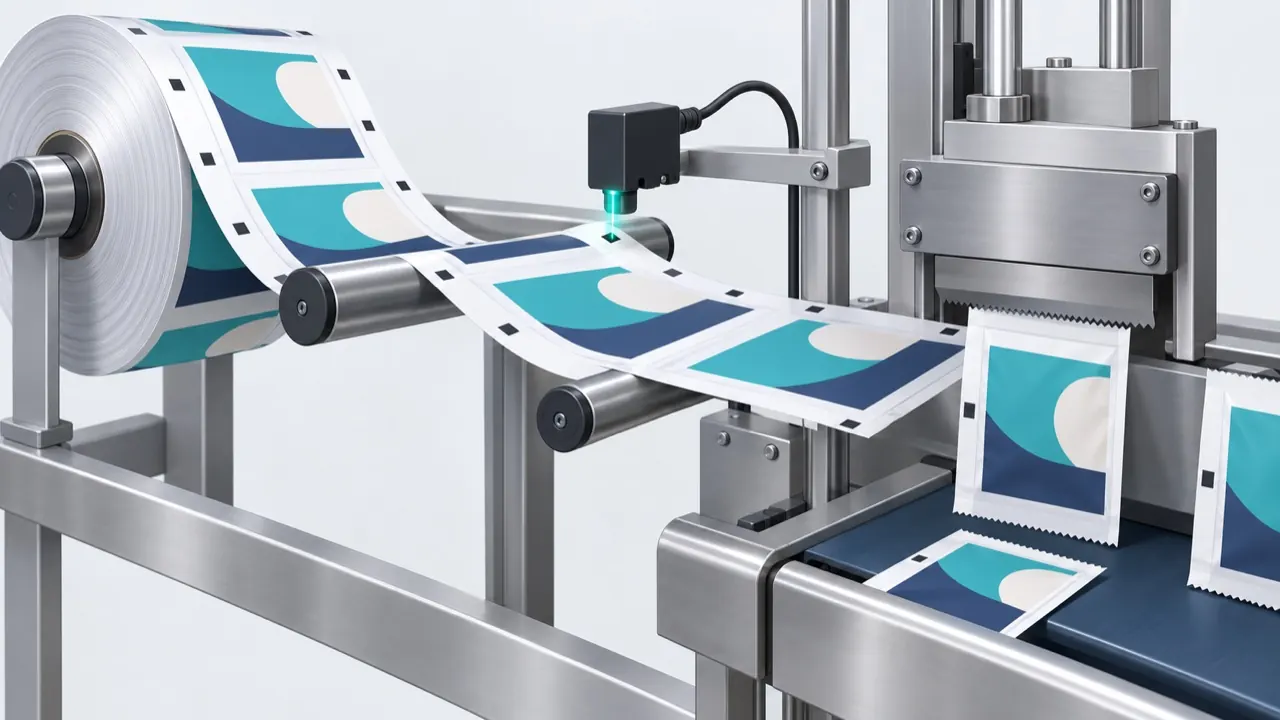
Illustration: a sensor reads each eye-mark so the seal and cut land in the same place on every sachet.
When you plan the artwork, agree the mark colour and contrast, mark size and position, and the print repeat with us and your film supplier. Then run the film at your chosen sachet length to see whether registration holds.
Seal integrity with surfactants
Surfactants help shampoo wet surfaces, so product can creep along the film and into small gaps in a seal. That makes seal strength, seal width and film type matter more than they do for a plain liquid. A leak check, a squeeze check and a look at the seal after handling belong in any proper trial. For sachet format and seal layout, read about four-side seal sachets.
Conditioner as an adaptable module
Conditioner and similar creamy personal-care products can often run with an adjusted configuration. They are thicker and usually foam less, but they tend to string more. We treat them as a variation on this page, not a separate capability we promise. The configuration, nozzle and film still get reviewed and tested for the individual formula.
Output and number of lanes
Output depends on the number of lanes and the cycles per minute, and shampoo foam and printing can limit both. Read about multi-lane sachet machines to see what limits lane count. We can only give a practical output for your shampoo after running it.
What information should you send?
- Product type and formula notes: viscosity with temperature, pearlising agents, particles, foaming behaviour.
- Dose per sachet in grams or millilitres.
- Sachet size and format, and whether the film is printed.
- Eye-mark position and print repeat, if the artwork exists.
- Number of fragrances or colours and how often you change them.
- A sample of the shampoo for a trial.
Our product and film trial checks foam, drips, registration and seal strength with your own product and film. The applications overview lists the other products we can look at.
Questions about shampoo sachet machines
Why does shampoo foam in the sachet?
Surfactants trap air when the product is agitated or dropped. A low, gentle fill and a suitable feed path cut the foam, and a trial shows whether what is left is acceptable.
Can one machine pack shampoo and conditioner?
Often, with changes to the dosing setup, but test each formula and clean between runs. Don't assume settings carry across.
What is an eye-mark and do I need one?
It is a mark on printed film that a sensor reads for registration. If your artwork has to line up with the seal and cut, you usually need one.
How do I choose between machine types for shampoo?
Start with viscosity, foaming and cleaning needs, and compare them with our guide on how to choose a sachet packaging machine.
Not sure which configuration fits your product?
Send your product and pack details, or ask for a trial on your own material before you decide.